Chapter 22 of 25
Real-World Applications
Where MLPs actually show up in production
9 min read
Created ২ আগ, ২০২৬
ভূমিকা (Motivation)
এতক্ষণ পর্যন্ত আমরা যা কিছু শিখেছি — ওয়েটেড সাম (weighted sums), অ্যাক্টিভেশন, ব্যাকপ্রোপাগেশন, ইনিশিয়ালাইজেশন, রেগুলারাইজেশন এবং সম্পূর্ণ ট্রেনিং পাইপলাইন — তার সবকিছুর একটাই চূড়ান্ত উদ্দেশ্য: অর্থপূর্ণ প্রেডিকশন বা অনুমান তৈরি করা, এমন সব বাস্তব সমস্যার ওপর যা সাধারণ মানুষের জীবনে প্রভাব ফেলে এবং যা বর্তমানে প্রোডাকশন সিস্টেমে সফলভাবে সচল রয়েছে। এই চ্যাপ্টারটি হলো সেই দীর্ঘ পরিশ্রমের ফসল বা পুরস্কার। এখানে কোনো একটি কাল্পনিক বা মোটিভেটিং উদাহরণ দেওয়ার বদলে, এই চ্যাপ্টারটি নিজেই বাস্তব উদাহরণের এক দারুণ সংকলন: বিভিন্ন শিল্প বা ইন্ডাস্ট্রিতে আমাদের এই পরিচিত মাল্টি-লেয়ার পারসেপ্ট্রন (MLP) বাস্তবে কোথায় কোথায় ব্যবহার করা হচ্ছে, কীভাবে এটি একা একাই পুরো কাজ সামলে নিচ্ছে অথবা অনেক বড় কোনো সিস্টেমের একটি গুরুত্বপূর্ণ অংশ হিসেবে নীরবে সচল রয়েছে, তা আমরা এখানে ঘুরে দেখব।
মূল ধারণা তৈরি করা (Building the Intuition)
নিচে আলোচনা করা প্রায় প্রতিটি ডোমেইনেই দুটি কমন প্যাটার্ন বা বৈশিষ্ট্যের পুনরাবৃত্তি দেখা যায়:
- স্বতন্ত্র টেবুলার ক্লাসিফায়ার/রিগ্রেসর (Standalone tabular classifier/regressor): এখানে MLP সরাসরি স্প্রেডশীটের মতো দেখতে স্ট্রাকচার্ড ফিচারগুলো — যেমন বয়স, আয়, সেন্সর রিডিং, ল্যাব টেস্টের রিপোর্ট ইত্যাদি — ইনপুট হিসেবে নেয় এবং প্রেডিকশন আউটপুট দেয়। এটি হলো MLP-র সবচেয়ে "ক্লাসিক" বা ঐতিহ্যবাহী ব্যবহার, যা আজও বিপুল জনপ্রিয়।
- বড় কোনো সিস্টেমের অংশ বা কম্পোনেন্ট: এখানে MLP কোনো কনভোলিউশনাল নেটওয়ার্ক, ট্রান্সফর্মার বা এম্বেডিং টেবিল থেকে আগে থেকেই এক্সট্র্যাক্ট করা বা বের করে নেওয়া ফিচারগুলোকে ইনপুট হিসেবে নেয় এবং সেটিকে চূড়ান্ত প্রেডিকশনে রূপান্তরিত করে। এই ক্ষেত্রে কাজ করার সময় MLP-কে প্রায়শই "হেড (head)" বা মাথা বলা হয় এবং এটি আধুনিক ডিপ লার্নিংয়ের প্রায় প্রতিটি আর্কিটেকচারের ভেতরেই কোনো না কোনো রূপে দেখা যায়।
এই দুটি ভিন্ন কাজের প্যাটার্ন মাথায় রাখলে নিচের আলোচনাগুলো বোঝা অনেক বেশি সহজ হবে।
স্বাস্থ্যসেবা (Healthcare)
টেবুলার বা স্ট্রাকচার্ড ক্লিনিকাল ডেটা নিয়ে কাজ করার সময় MLP ব্যাপকভাবে ব্যবহৃত হয়: যেমন ইলেকট্রনিক হেলথ রেকর্ড (বয়স, ল্যাব টেস্ট রিপোর্ট, ভাইটাল সাইন) থেকে রোগীদের স্বাস্থ্যঝুঁকির স্কোর প্রেডিক্ট করা, রোগের অগ্রগতির মাত্রা অনুমান করা, এবং মেডিকেল ইমেজিং পাইপলাইনের চূড়ান্ত ক্লাসিফিকেশন লেয়ার হিসেবে কাজ করা (যেখানে একটি কনভোলিউশনাল নেটওয়ার্ক ছবি থেকে ফিচার এক্সট্র্যাক্ট করে এবং একটি MLP হেড সেই ফিচারগুলোকে একটি চূড়ান্ত রোগ নির্ণয় বা ডায়াগনসিসে রূপান্তর করে)।
একটি বাস্তব উদাহরণ: ডায়াবেটিস ঝুঁকির পূর্বাভাস (diabetes risk prediction)
রোগীর টেবুলার ফিচারসমূহ — যেমন বয়স, বিএমআই (BMI), ব্লাড গ্লুকোজ, রক্তচাপ, পারিবারিক ইতিহাস ইত্যাদি — দেওয়া থাকলে একটি সিগময়েড আউটপুট বিশিষ্ট MLP-কে বাইনারি ক্রস-এন্ট্রপি লস (binary cross-entropy loss) দিয়ে ট্রেন করা যায়, যা নির্দিষ্ট সময়ের মধ্যে ওই রোগীর ডায়াবেটিস হওয়ার সম্ভাবনা বা প্রোবাবিলিটি আউটপুট দেয়। এটি চিকিৎসকদের কাজকে প্রতিস্থাপন করার বদলে তাদের সঠিক সিদ্ধান্ত নিতে বা ক্লিনিকাল ডিসিশন-মেকিংয়ে (clinical decision-making) দারুণ সহায়তা করে।
স্বাস্থ্যসেবায় MLP নির্বাচনের পেছনের যুক্তিটাও গুরুত্বপূর্ণ। ইলেকট্রনিক হেলথ রেকর্ড থেকে পাওয়া ফিচারগুলো (বয়স, ল্যাব ভ্যালু, ওষুধের ইতিহাস) সাধারণত ইতিমধ্যেই সংখ্যাভিত্তিক বা সহজেই সংখ্যায় রূপান্তরযোগ্য এবং একটি নির্দিষ্ট আকারের টেবিল হিসেবে সাজানো থাকে — ঠিক যে ধরনের ইনপুটের জন্য MLP সবচেয়ে বেশি উপযোগী। এখানে CNN বা RNN-এর দরকার নেই কারণ ডেটাতে কোনো স্থানিক বা সময়ভিত্তিক ধারাবাহিকতা প্রকাশ করার প্রয়োজন নেই — প্রতিটি ফিচার স্বাধীনভাবে গুরুত্বপূর্ণ, ঠিক যেমনটা MLP-র ফুললি-কানেক্টেড লেয়ার অনুমান করে নেয়।
মেডিকেল ইমেজিং-এ MLP-র ভূমিকা (MLP's Role in Medical Imaging)
যখন ইনপুট হয় এক্স-রে, এমআরআই বা সিটি স্ক্যানের মতো ছবি, তখন প্রথমে একটি CNN ব্যাকবোন ছবিটি থেকে প্রাসঙ্গিক ফিচার এক্সট্র্যাক্ট করে (যেমন প্রান্ত, টেক্সচার, অস্বাভাবিক প্যাটার্ন), এবং তারপর একটি ছোট MLP "হেড" সেই এক্সট্র্যাক্ট করা ফিচার ভেক্টরকে একটি চূড়ান্ত রোগ নির্ণয়ে (যেমন "নিউমোনিয়া আছে/নেই", অথবা টিউমারের ধরন) রূপান্তর করে। এই ভাগাভাগিটি গুরুত্বপূর্ণ: CNN স্থানিক প্যাটার্ন চেনার কাজে বিশেষজ্ঞ, কিন্তু একটি ফিক্সড-লেন্থ ফিচার ভেক্টর থেকে ক্লাস প্রোবাবিলিটিতে যাওয়ার কাজটি ঠিক সেই কাজ যা MLP সবচেয়ে ভালো করে।
ফাইন্যান্স বা অর্থায়ন (Finance)
- ক্রেডিট স্কোরিং (Credit scoring): কোনো লোন বা ঋণ আবেদনকারীর আর্থিক ইতিহাস বিশ্লেষণ করে তার খেলাপি (default) হওয়ার সম্ভাবনা কতটুকু তা প্রেডিক্ট করা — এটি একটি বাইনারি ক্লাসিফিকেশন সমস্যা।
- জালিয়াতি সনাক্তকরণ (Fraud detection): অস্বাভাবিক বা সন্দেহজনক লেনদেনগুলোকে ফ্ল্যাগ করা, যা সাধারণত অত্যন্ত ইমব্যালান্সড ডেটার ওপর একটি বাইনারি ক্লাসিফিকেশন হিসেবে ডিজাইন করা হয় — আর ঠিক এই জায়গাতেই ভারসাম্যহীন ডেটাসেটের ক্ষেত্রে raw অ্যাকিউরেসি (accuracy) কতটা বিভ্রান্তিকর হতে পারে সে সম্পর্কিত আগের চ্যাপ্টারের সতর্কতাটি সবচেয়ে বেশি কাজে আসে।
- অ্যালগরিদমিক ট্রেডিং সিগন্যাল (Algorithmic trading signals): বিভিন্ন বাজার বা মার্কেট ফিচার থেকে স্বল্প মেয়াদে দাম বাড়া বা কমার দিক (direction) এবং তার পরিমাণ (magnitude) — অর্থাৎ ক্লাসিফিকেশন বা রিগ্রেশন — প্রেডিক্ট করা।
একটি বাস্তব উদাহরণ: ক্রেডিট স্কোরিং মডেল
একজন ঋণ আবেদনকারীর মাসিক আয়, বিদ্যমান ঋণের পরিমাণ, চাকরির স্থিতিশীলতা, অতীতের পেমেন্ট হিস্ট্রি এবং ক্রেডিট ইউটিলাইজেশন রেশিও-র মতো ২০-৫০টি সংখ্যাভিত্তিক ফিচার একসাথে একটি ইনপুট ভেক্টর তৈরি করে। একটি MLP এই ভেক্টরটি নিয়ে একটি সিগময়েড আউটপুট দেয় যা "খেলাপি হওয়ার সম্ভাবনা" প্রকাশ করে। ব্যাংকগুলো প্রায়ই এই ধরনের মডেলের সাথে গ্রেডিয়েন্ট-বুস্টেড ট্রি (যেমন XGBoost) তুলনা করে দেখে — টেবুলার ফাইন্যান্সিয়াল ডেটার ক্ষেত্রে দুটোই প্রতিযোগিতামূলক ফলাফল দেয়, তবে MLP-র সুবিধা হলো এটি সহজেই অন্য নিউরাল নেটওয়ার্ক কম্পোনেন্টের (যেমন এম্বেডিং লেয়ার) সাথে একত্রিত করে এন্ড-টু-এন্ড ট্রেন করা যায়।
সাইবার সিকিউরিটি (Cybersecurity)
নেটওয়ার্ক ট্রাফিক থেকে এক্সট্র্যাক্ট করা ফিচারগুলোর ওপর ভিত্তি করে — যেমন packet size, কানেকশনের সময়কাল, প্রোটোকল ফ্ল্যাগ ইত্যাদি — ট্রাফিকটি সাধারণ নাকি ক্ষতিকারক (malicious) তা ক্লাসিফাই করতে নেটওয়ার্ক ইনট্রুশন ডিটেকশন সিস্টেমে (network intrusion detection systems) MLP ব্যবহার করা হয়। যেহেতু সাইবার আক্রমণের ধরন বা অ্যাটাক প্যাটার্ন অনবরত পরিবর্তিত হতে থাকে, তাই এই ধরনের মডেলগুলোকে একবার ডেপ্লয় করে ফেলে রাখার বদলে নিয়মিত নতুন নতুন ট্রাফিক ডেটা দিয়ে রি-ট্রেন (retrain) করা হয়।
ইনপুট ফিচার ও আউটপুট: সাধারণত প্রতিটি নেটওয়ার্ক কানেকশন বা "ফ্লো" থেকে numeric ফিচার বের করা হয় — যেমন duration, প্রেরিত/গৃহীত বাইটের সংখ্যা, প্রোটোকল টাইপ (one-hot এনকোড করা), এরর রেট ইত্যাদি — এবং আউটপুট হয় একটি বাইনারি লেবেল (স্বাভাবিক/আক্রমণ) অথবা মাল্টি-ক্লাস লেবেল (আক্রমণের নির্দিষ্ট ধরন, যেমন DoS, probe, R2L)। MLP এখানে বেছে নেওয়ার কারণ হলো এই ফিচারগুলো প্রকৃতিগতভাবেই টেবুলার এবং তাদের মধ্যে জটিল, নন-লিনিয়ার মিথস্ক্রিয়া থাকে যা একটি সাধারণ লিনিয়ার মডেল বা সিদ্ধান্ত গাছ (decision tree) দিয়ে সহজে ক্যাপচার করা কঠিন।
রেকমেন্ডেশন সিস্টেম (Recommendation Systems)
যদিও বড় আকারের রেকমেন্ডেশন সিস্টেমগুলো অনেক বেশি জটিল বা বিশেষায়িত আর্কিটেকচার ব্যবহার করে, তবুও সেগুলোর একটি গুরুত্বপূর্ণ অংশ হিসেবে প্রায়ই MLP ব্যবহার করা হয়: যা মূলত ইউজার এবং আইটেমের কম্বাইন করা এম্বেডিং ভেক্টরকে (embedding vectors) ইনপুট হিসেবে নেয় এবং একটি আনুমানিক রেটিং বা ক্লিক করার সম্ভাবনা আউটপুট দেয় (যা যথাক্রমে রিগ্রেশন বা বাইনারি ক্লাসিফিকেশন টাস্ক)। এই সাধারণ প্যাটার্নটি — অর্থাৎ শিখে নেওয়া বা তৈরি করা ফিচার ভেক্টরের ওপর একটি MLP প্রয়োগ করা — আধুনিক ইন্ডাস্ট্রিয়াল মেশিন লার্নিং সিস্টেমগুলোতে MLP-র অন্যতম সেরা একটি ব্যবহারিক কাজ।
কেন এম্বেডিং + MLP এত জনপ্রিয় একটি কম্বিনেশন
এই প্যাটার্নটিকে প্রায়ই "ওয়াইড অ্যান্ড ডিপ" বা এম্বেডিং-ভিত্তিক আর্কিটেকচার বলা হয়: প্রতিটি ইউজার এবং প্রতিটি আইটেমকে (যেমন একটি প্রোডাক্ট বা একটি ভিডিও) একটি ছোট ডেন্স ভেক্টরে (embedding) রূপান্তর করা হয়, তারপর এই দুটো ভেক্টর একসাথে যুক্ত (concatenate) করে একটি MLP-তে পাঠানো হয়। কেন সরাসরি MLP-তে ইউজার আইডি বা প্রোডাক্ট আইডি পাঠানো হয় না? কারণ আইডিগুলো ক্যাটাগরিক্যাল এবং তাদের মধ্যে কোনো স্বাভাবিক সংখ্যাগত সম্পর্ক নেই — এম্বেডিং লেয়ার আগে থেকেই সেই ক্যাটাগরিক্যাল তথ্যকে একটি অর্থপূর্ণ, নন্যাশত সংখ্যাগত রূপে রূপান্তর করে, যা MLP তখন সহজেই প্রসেস করতে পারে।
ম্যানুফ্যাকচারিং: প্রেডিক্টিভ মেইনটেন্যান্স (Predictive Maintenance)
শিল্প কারখানার বিভিন্ন যন্ত্রপাতি থেকে দীর্ঘ সময় ধরে পাওয়া সেন্সর রিডিং — কম্পন বা ভাইব্রেশন, তাপমাত্রা, প্রেসার বা চাপ ইত্যাদি — থেকে একটি নির্দিষ্ট সময়ের মধ্যে যন্ত্রটি নষ্ট বা ফেইল (fail) করার সম্ভাবনা প্রেডিক্ট করতে MLP-কে ট্রেন করা যায়। এর ফলে কোনো যন্ত্রপাতি নষ্ট হয়ে যাওয়ার পর কাজ করার বদলে আগে থেকেই মেরামত বা রক্ষণাবেক্ষণের পরিকল্পনা করা সম্ভব হয়। এটি যেমন হঠাৎ করে কাজ বন্ধ হয়ে যাওয়ার সময় কমায়, তেমনই অপ্রয়োজনীয় রক্ষণাবেক্ষণের পেছনে অহেতুক খরচও বাঁচায়।
রোবোটিক্স (Robotics)
রোবোটিক কন্ট্রোল সিস্টেমের ভেতরে ফাংশন অ্যাপ্রক্সিমেটর (function approximators) হিসেবে MLP কাজ করে: যেমন সেন্সর রিডিং থেকে মোটরের কন্ট্রোল সিগন্যালের ম্যাপিং অনুমান করা, অথবা রিইনফোর্সমেন্ট লার্নিং (reinforcement learning) অ্যালগরিদমগুলোর ভেতরে ভ্যালু-ফাংশন (value-function) বা পলিসি-ফাংশন (policy-function) অ্যাপ্রক্সিমেটর হিসেবে কাজ করা।
একটি কনক্রিট উদাহরণ: একটি রোবোটিক আর্মের প্রতিটি জয়েন্টের কারেন্ট পজিশন ও ভেলোসিটি (যেমন ৬-ডিগ্রি-অফ-ফ্রিডম আর্মের জন্য ১২টি সংখ্যা) এবং টার্গেট পজিশন ইনপুট হিসেবে দেওয়া হলে, একটি MLP প্রতিটি জয়েন্টে প্রয়োজনীয় টর্ক বা মোটর কমান্ড আউটপুট দিতে পারে। এটি একটি রিগ্রেশন সমস্যা, এবং এখানে MLP-কে বেছে নেওয়ার কারণ হলো এটি খুব দ্রুত ইনফারেন্স দিতে পারে (রিয়েল-টাইম কন্ট্রোল লুপের জন্য অপরিহার্য) এবং জটিল, নন-লিনিয়ার কাইনেমেটিক সম্পর্ক শিখতে সক্ষম যা ক্লাসিক্যাল কন্ট্রোল ইকুয়েশনে হাতে লেখা কঠিন।
ন্যাচারাল ল্যাঙ্গুয়েজ প্রসেসিং (NLP)
প্রতিটি ট্রান্সফর্মারের ভেতরের MLP
সহজে চোখে পড়ে না, কিন্তু প্রতিটি ট্রান্সফর্মার-ভিত্তিক ল্যাঙ্গুয়েজ মডেলের — যা আধুনিক চ্যাটবট এবং অনুবাদ ব্যবস্থাগুলোকে সচল রাখছে — প্রতিটি স্তরের বা লেয়ারের ভেতরে একটি করে পজিশন-ওয়াইজ feedforward network (position-wise feedforward network) থাকে, যা কাঠামোগত দিক থেকে হুবহু এই কোর্সে শেখা মাল্টি-লেয়ার পারসেপ্ট্রন (MLP): অর্থাৎ একটি লিনিয়ার লেয়ার, একটি নন-লিনিয়ার অ্যাক্টিভেশন (সাধারণত GELU), এবং আরেকটি লিনিয়ার লেয়ার। তাই শুধুমাত্র প্রবীণ টেবুলার-ডেটা মডেলই নয়, আধুনিক ও সবচেয়ে উন্নত আর্কিটেকচারগুলো ভালোভাবে বোঝার জন্যও MLP-র জ্ঞান সরাসরি অপরিহার্য।
কম্পিউটার ভিশন (Computer Vision)
যদিও raw ছবি প্রসেস করার ক্ষেত্রে কনভোলিউশনাল নিউরাল নেটওয়ার্কের দাপট সবচেয়ে বেশি, tablecloth বা ছবির পেছনের আর্কিটেকচারের চূড়ান্ত ক্লাসিফিকেশন "হেড" (head) হিসেবে MLP-ই ব্যবহৃত হয়, যা একটি সফটম্যাক্স (softmax) আউটপুট লেয়ারের মাধ্যমে এক্সট্র্যাক্ট করা ফিচার ভেক্টরকে ক্লাস প্রোবাবিলিটিতে রূপান্তরিত করে।
টাইম সিরিজ এবং টেবুলার ডেটা (Time Series and Tabular Data)
বিশেষ করে টেবুলার ডেটার জন্য — স্প্রেডশীটের মতো দেখতে সারি ও নাম দেওয়া কলাম বিশিষ্ট ডেটা — MLP এখনও একটি অত্যন্ত শক্তিশালী ও জনপ্রিয় বেসলাইন হিসেবে ব্যবহৃত হয়, যদিও ছোট ও মাঝারি আকারের টেবুলার ডেটাসেটের ওপর ভালো টিউন করা গ্রিডিয়েন্ট-বুস্টেড ট্রি (gradient-boosted tree) পদ্ধতিগুলো প্রায়শই MLP-র সমান বা তার চেয়েও ভালো পারফর্ম করে থাকে।
ই-কমার্স ও বিজ্ঞাপন (E-commerce and Advertising)
অনলাইন বিজ্ঞাপন ব্যবস্থায় "ক্লিক-থ্রু রেট প্রেডিকশন" (Click-Through Rate বা CTR prediction) হলো MLP-র অন্যতম বড় ও লাভজনক ব্যবহারের ক্ষেত্র। ইউজারের ব্রাউজিং হিস্ট্রি, বিজ্ঞাপনের ক্যাটাগরি, দিনের সময়, ডিভাইসের ধরন ইত্যাদি থেকে তৈরি ফিচার ভেক্টরকে ইনপুট হিসেবে নিয়ে MLP একটি সম্ভাবনা আউটপুট দেয় যে ইউজারটি ওই নির্দিষ্ট বিজ্ঞাপনে ক্লিক করবে কি না। যেহেতু এই সিস্টেমগুলো প্রতি সেকেন্ডে লক্ষ লক্ষ প্রেডিকশন করতে হয়, তাই MLP-র দ্রুত ও সমান্তরালযোগ্য (parallelizable) ইনফারেন্স একটি বড় সুবিধা — এটিই মূলত কেন অনেক বেশি জটিল আর্কিটেকচারের বদলেও MLP-ভিত্তিক মডেল এখানে প্রোডাকশনে সবচেয়ে বেশি ব্যবহৃত হয়।
এনার্জি ও ইউটিলিটি (Energy and Utilities)
বৈদ্যুতিক গ্রিড অপারেটররা আবহাওয়ার তথ্য (তাপমাত্রা, আর্দ্রতা), দিনের সময়, সপ্তাহের দিন এবং ঐতিহাসিক ব্যবহারের প্যাটার্ন থেকে ফিচার তৈরি করে ভবিষ্যতের বিদ্যুৎ চাহিদা (load forecasting) প্রেডিক্ট করতে MLP ব্যবহার করে। এটি একটি রিগ্রেশন সমস্যা, যেখানে সঠিক পূর্বাভাস সরাসরি খরচ বাঁচায় — অতিরিক্ত উৎপাদন এড়ানো যায় এবং ঘাটতি প্রতিরোধ করা যায়। সৌর ও বায়ু বিদ্যুৎ উৎপাদন প্রেডিক্ট করার ক্ষেত্রেও একই কাঠামো ব্যবহৃত হয়।
কৃষি (Agriculture)
মাটির আর্দ্রতা, pH মাত্রা, তাপমাত্রা এবং ঐতিহাসিক ফলনের তথ্য থেকে ফসলের ফলন পূর্বাভাস দেওয়া, অথবা সেন্সর নেটওয়ার্ক থেকে পাওয়া তথ্য দিয়ে কোনো নির্দিষ্ট এলাকায় রোগ বা পোকামাকড়ের আক্রমণের ঝুঁকি প্রেডিক্ট করার ক্ষেত্রে MLP ব্যবহৃত হয়। এই ক্ষেত্রে ডেটা প্রায়ই সীমিত থাকে (ছোট ডেটাসেট), তাই সাধারণত অপেক্ষাকৃত ছোট, ভালোভাবে রেগুলারাইজড MLP আর্কিটেকচার বেছে নেওয়া হয়, যা এই কোর্সের রেগুলারাইজেশন চ্যাপ্টারে আলোচিত কৌশলগুলোর একটি সরাসরি বাস্তব প্রয়োগ।
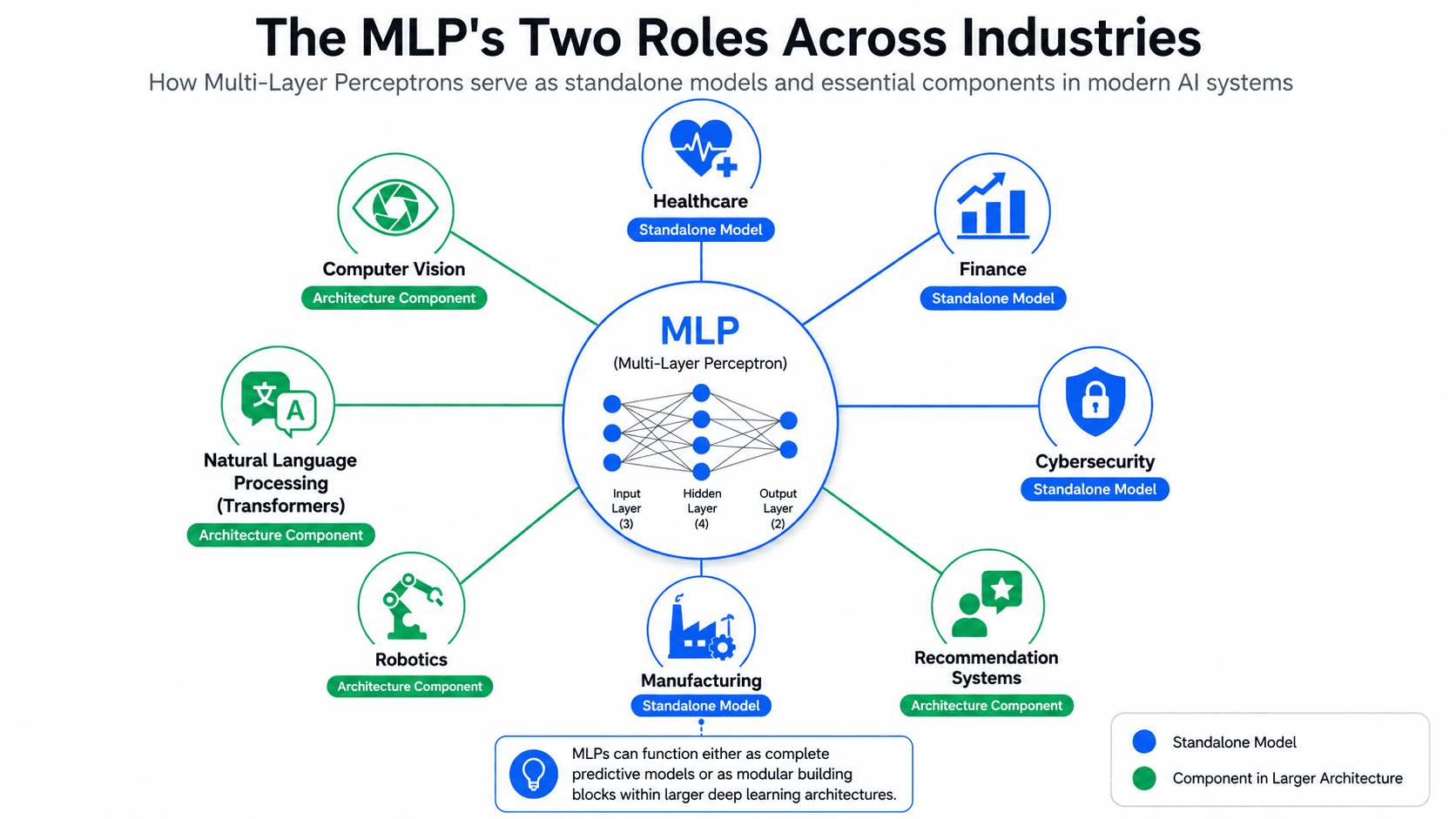
এক নজরে সারসংক্ষেপ টেবিল (Summary Table)
| ডোমেইন (Domain) | সাধারণ কাজ (Typical Task) | কাজের ধরণ (Task Type) |
|---|---|---|
| স্বাস্থ্যসেবা (Healthcare) | রোগের ঝুঁকির পূর্বাভাস | বাইনারি ক্লাসিফিকেশন (Binary classification) |
| ফাইন্যান্স (Finance) | ক্রেডিট স্কোরিং, জালিয়াতি সনাক্তকরণ | বাইনারি ক্লাসিফিকেশন |
| সাইবার সিকিউরিটি | অনুপ্রবেশ সনাক্তকরণ (Intrusion detection) | বাইনারি/মাল্টি-ক্লাস ক্লাসিফিকেশন |
| রেকমেন্ডেশন | ক্লিক করার হার / রেটিং অনুমান করা | ক্লাসিফিকেশন / রিগ্রেশন (Regression) |
| ম্যানুফ্যাকচারিং | প্রেডিক্টিভ মেইনটেন্যান্স (Predictive maintenance) | বাইনারি ক্লাসিফিকেশন |
| রোবোটিক্স (Robotics) | কন্ট্রোল সিগন্যাল অনুমান করা | রিগ্রেশন |
| NLP | ট্রান্সফর্মারের ভেতরে ফিডফরওয়ার্ড সাবলেয়ার | বড় মডেলের ভেতরের একটি উপাদান (Component) |
| কম্পিউটার ভিশন | ফিচার এক্সট্র্যাকশনের পর ক্লাসিফিকেশন হেড | মাল্টি-ক্লাস ক্লাসিফিকেশন |
| ই-কমার্স ও বিজ্ঞাপন | ক্লিক-থ্রু রেট (CTR) প্রেডিকশন | বাইনারি ক্লাসিফিকেশন |
| এনার্জি ও ইউটিলিটি | বিদ্যুৎ চাহিদার পূর্বাভাস (Load forecasting) | রিগ্রেশন |
| কৃষি (Agriculture) | ফসলের ফলন পূর্বাভাস, রোগ সনাক্তকরণ | রিগ্রেশন / ক্লাসিফিকেশন |
মূল বিষয়গুলো (Key Takeaways)
Key Takeaways
- স্বাস্থ্যসেবা, ফাইন্যান্স, সাইবার সিকিউরিটি এবং ম্যানুফ্যাকচারিংয়ের মতো ক্ষেত্রগুলোতে সরাসরি টেবুলার/স্ট্রাকচার্ড ডেটার ওপর MLP বহুল ব্যবহৃত হয়।
- CNN বা Transformers-এর মতো বড় বড় আর্কিটেকচারের চূড়ান্ত ক্লাসিফিকেশন বা রিগ্রেশন "হেড" হিসেবে MLP প্রায়শই একটি অবিচ্ছেদ্য উপাদান হিসেবে কাজ করে।
- প্রতিটি ট্রান্সফর্মার ব্লকের ভেতরের পজিশন-ওয়াইজ ফিডফরওয়ার্ড সাবলেয়ারটি কাঠামোগতভাবে একটি MLP, যার ফলে এই চ্যাপ্টারের পড়া আধুনিক লার্জ ল্যাঙ্গুয়েজ মডেল (LLM) বোঝার জন্য অত্যন্ত দরকারি।
- বাস্তব কোনো প্রজেক্ট ডিজাইন করার সময় সমস্যাটি একটি স্বতন্ত্র মডেল নাকি অন্য কোনো বড় সিস্টেমের অংশ হিসেবে কাজ করবে — তা চিহ্নিত করা প্রথম গুরুত্বপূর্ণ ধাপ।
সাধারণ ভুল ধারণা (Common Mistakes)
ধরে নেওয়া যে CNN এবং Transformers-এর ভিড়ে MLP এখন অপ্রচলিত বা সেকেলে
MLP মোটেও অপ্রচলিত হয়ে যায়নি — টেবুলার ডেটার জন্য এটি এখনও অন্যতম সেরা ও ডিফল্ট পছন্দ, এবং প্রতিটি ট্রান্সফর্মার লেয়ারের ভেতরে ফিডফরওয়ার্ড সাবলেয়ার হিসেবে এটি সফলভাবে কাজ করছে। "খবরের শিরোনামে না থাকা" আর "বাস্তবে ব্যবহৃত না হওয়া" — এ দুটি সম্পূর্ণ ভিন্ন বিষয়।
ইমব্যালান্সড ডেটার ক্ষেত্রে সাধারণ অ্যাকিউরেসির ওপর নির্ভর করা
ওপরে আলোচনা করা বেশ কয়েকটি ক্ষেত্র — যেমন জালিয়াতি সনাক্তকরণ, নেটওয়ার্ক অনুপ্রবেশ সনাক্তকরণ, প্রেডিক্টিভ মেইনটেন্যান্স, বিরল রোগ নির্ণয় — প্রাকৃতিকভাবেই অত্যন্ত ভারসাম্যহীন বা ইমব্যালান্সড (imbalanced)। এই ধরনের প্রজেক্টে মূল মেট্রিক হিসেবে শুধুমাত্র raw অ্যাকিউরেসি (accuracy) ব্যবহার করলে কাগজে-কলমে মডেলটি নিখুঁত দেখালেও বাস্তবে এটি আসল ও গুরুত্বপূর্ণ ঘটনাগুলোর কোনোটিই সনাক্ত করতে পারবে না।
রি-ট্রেনিংয়ের পরিকল্পনা ছাড়া মডেল ডেপ্লয় করা
লেনদেনের ধরন, সাইবার আক্রমণের রূপ, এমনকি বাজার বা মার্কেটের গতিপ্রকৃতি সময়ের সাথে সাথে অনবরত পরিবর্তিত হতে থাকে। একবার ট্রেন করে চিরদিনের জন্য ফেলে রাখা মডেল সময়ের সাথে সাথে খুব নীরবে তার পারফরম্যান্স হারাতে থাকে; তাই এই ধরনের বাস্তব প্রজেক্টগুলোতে একদম শুরু থেকেই নিয়মিত বিরতিতে নতুন ডেটা দিয়ে রি-ট্রেন (retrain) করার ব্যবস্থা রাখা আবশ্যক।
সব ডোমেইনে একই আর্কিটেকচার কপি-পেস্ট করা
একটি ডোমেইনে (যেমন ক্রেডিট স্কোরিং) ভালো কাজ করা হাইপারপ্যারামিটার সেটআপ অন্য একটি ভিন্ন ডোমেইনে (যেমন প্রেডিক্টিভ মেইনটেন্যান্স) হুবহু কপি করে বসিয়ে দিলে প্রায়ই খারাপ ফলাফল আসে। ফিচারের সংখ্যা, ডেটাসেটের আকার এবং ক্লাস ইমব্যালান্সের মাত্রা ডোমেইন ভেদে অনেক আলাদা হতে পারে — প্রতিটি নতুন প্রজেক্টেই হিডেন লেয়ারের আকার, রেগুলারাইজেশনের শক্তি এবং লার্নিং রেট নতুন করে যাচাই ও টিউন করা প্রয়োজন।
Interview Corner
Quick Check
বাস্তবে এটি কোথায় দেখা যায় (Where This Shows Up in Practice)
যেকোনো বাস্তব বা প্রোডাকশন মেশিন লার্নিং সিস্টেমের দিকে ভালো করে তাকান — কোনো ব্যাংকের ফ্রড সনাক্তকরণ পাইপলাইন, হাসপাতালের ঝুঁকি পরিমাপের ড্যাশবোর্ড, কোনো রেকমেন্ডেশন ইঞ্জিন, অথবা আপনি এই মুহূর্তে যে ল্যাঙ্গুয়েজ মডেলটি ব্যবহার করছেন তার ভেতরে — সবখানেই খুব জাঁকজমকহীন কিন্তু অত্যন্ত গুরুত্বপূর্ণ কাজ করে চলেছে একটিমাল্টি-লেয়ার পারসেপ্ট্রন (MLP): যা হলো মূলত এই কোর্সে শেখা ব্যাকপ্রোপাগেশন এবং পাইপলাইন দিয়ে ট্রেন করা ওয়েটেড সাম, অ্যাক্টিভেশন এবং বায়াসের একটি স্তুপ বা সমষ্টি। এটিই এই পুরো কোর্সের সবচেয়ে বড় শিক্ষণীয় বিষয়: MLP কোনো ঐতিহাসিক সিঁড়ি নয় যা সময়ের সাথে হারিয়ে গেছে। এটি হলো সেই সক্রিয় প্রাণকেন্দ্র যাকে ঘিরে আজকের আধুনিক ও জটিল আর্কিটেকচারগুলো গড়ে উঠেছে।