Chapter 4 of 25
A Brief History of Neural Networks
Two winters, one thaw, and a revolution
10 min read
Created ২ আগ, ২০২৬
ভূমিকা (Motivation)
যেকোনো ফিল্ডেরই একটি শুরুর গল্প থাকে, কিন্তু Neural Network-এর গল্পটা একটু বেশিই নাটকীয় — এই গল্পে রয়েছে দুটি উইন্টার (শীতকাল বা স্থবিরতা), প্রায় মারা যাওয়ার একটি অভিজ্ঞতা, এবং এমন একটি বিশাল প্রত্যাবর্তন বা কামব্যাক যার ফলে বর্তমানে আপনার প্রতিদিন ব্যবহৃত সফটওয়্যারগুলোর একটি বড় অংশ এর ওপর নির্ভর করে চলছে। এটি এমন কোনো ইতিহাস নয় যে পড়ে এড়িয়ে যাবেন। এই কোর্সের বাকি অংশে আপনি যতগুলো ডিজাইন সিদ্ধান্ত এবং টার্মিনোলজির (terminology) মুখোমুখি হবেন, তার প্রায় সবই এই টাইমলাইনের কোনো না কোনো ঘটনার কারণে তৈরি হয়েছে। কেন এই ফিল্ডটি দুবার প্রায় মারা যেতে বসেছিল, এবং ঠিক কোন জিনিসটা প্রতিবার তাকে বাঁচিয়ে তুলেছে, তা বুঝতে পারলে পরের চ্যাপ্টারগুলোর অঙ্ক আপনার কাছে আর অহেতুক বা এলোমেলো মনে হবে না, বরং খুবই স্বাভাবিক মনে হবে।
একটি বাস্তব জীবনের উদাহরণ (A Real-Life Scenario)
কল্পনা করুন, একটি অত্যন্ত সম্ভাবনাময় গবেষণার ক্ষেত্রে হঠাৎ করেই অনেক ফান্ডিং এবং উদ্দীপনা চলে এলো। কিন্তু এরপর একটি মাত্র প্রভাবশালী গবেষণাপত্র অকাট্যভাবে প্রমাণ করে দিল যে এই জনপ্রিয় পদ্ধতির মধ্যে একটি মৌলিক ভুল আছে। রাতারাতি ফান্ডিং বন্ধ হয়ে গেল। গবেষকরা অন্য ফিল্ডে চলে গেলেন। তারপর, এক দশকেরও বেশি সময় পর, কেউ একজন ঠিক ওই ভুলেরই একটি কার্যকরী সমাধান খুঁজে পেল — এবং ফিল্ডটি শুধু আগের অবস্থায় ফিরলোই না, বরং আগের চেয়ে কয়েকগুণ বড় হয়ে বিস্ফোরণের মতো ছড়িয়ে পড়লো।
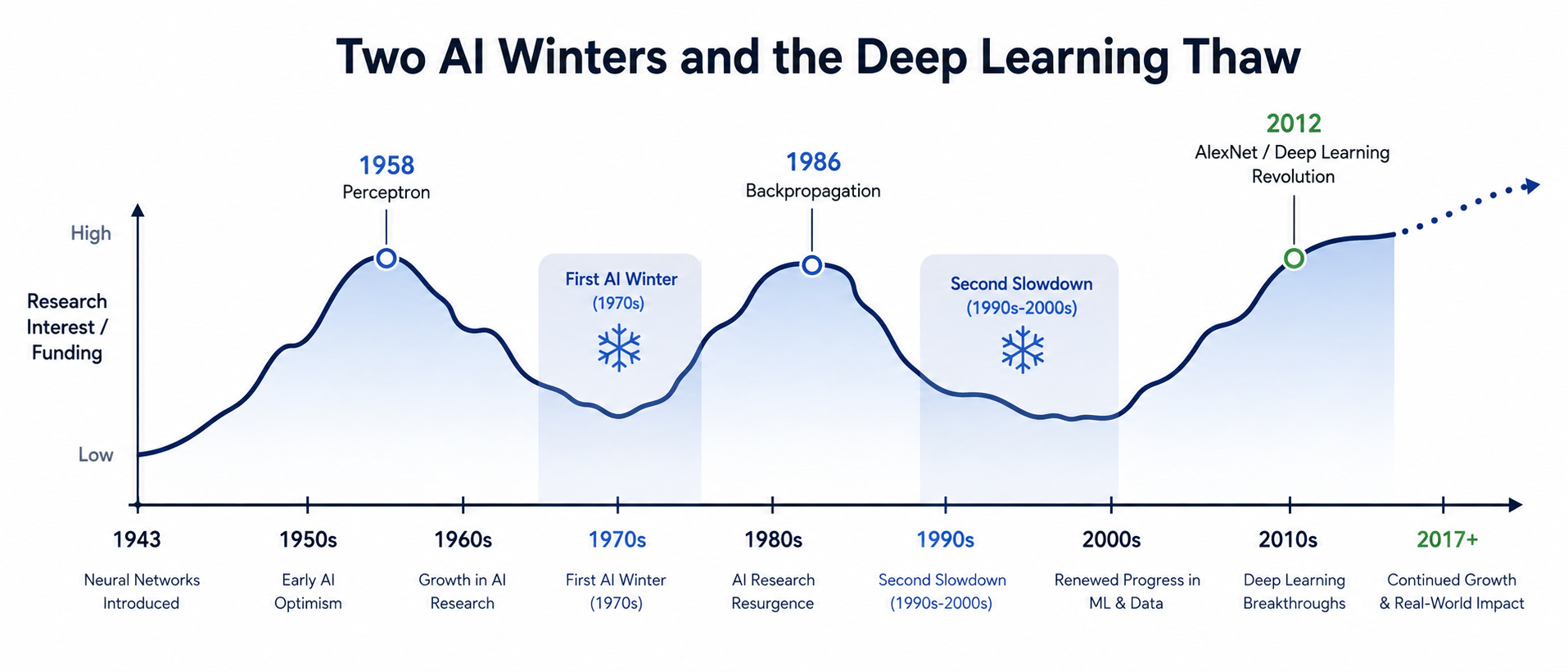
এটি কোনো কাল্পনিক গল্প নয়। এটিই হলো Neural Network-এর ইতিহাসের বাস্তব চিত্র — যা একবার নয়, দু-দুবার ঘটেছে। প্রথমবার ১৯৭০-এর দশকে, আর দ্বিতীয়বার একটু মৃদুভাবে ১৯৯০ এবং ২০০০-এর দশকে। আপনি এখন যে চ্যাপ্টারটি পড়ছেন, তা মূলত এই দুই পতন এবং দুই পুনরুদ্ধারের ধারাবিবরণী।
মূল ধারণা তৈরি করা (Building the Intuition)
বিস্তারিত জানার আগে গল্পের সারমর্মটা একটু জেনে নেওয়া যাক: একটি সাধারণ গাণিতিক ধারণা প্রস্তাব করা হলো (একটি নিউরন যা ওয়েটেড সাম বা weighted sum-এর ওপর ভিত্তি করে ফায়ার করে), তারপর কেউ একজন বুঝতে পারল কীভাবে একে স্বয়ংক্রিয়ভাবে শেখানো যায়, তারপর অন্য একজন প্রমাণ করল যে এই সাধারণ ভার্সনের কিছু কঠিন সীমাবদ্ধতা আছে, এরপর — বছরের পর বছর অন্ধকারে থাকার পর — অন্য কেউ সেই হারিয়ে যাওয়া টুকরোটি খুঁজে পেল যা ওই সীমাবদ্ধতা দূর করে দেয়, আর ফিল্ডটি আগের চেয়েও শক্তিশালী হয়ে ফিরে এলো।
1943
ম্যাককালচ-পিটস নিউরন (The McCulloch-Pitts Neuron)
নিউরনের প্রথম গাণিতিক মডেল: বাইনারি ইনপুট, একটি নির্দিষ্ট থ্রেশহোল্ড (threshold), কিন্তু শেখার কোনো ব্যবস্থা ছিল না।
1958
দ্য পারসেপট্রন (The Perceptron)
Frank Rosenblatt একটি লার্নিং রুল বা শেখার নিয়ম যোগ করেন — যা দিয়ে ওয়েটগুলো (weights) ডেটা থেকে স্বয়ংক্রিয়ভাবে অ্যাডজাস্ট হতে পারতো। বলা যায়, এটিই ছিল বর্তমান Machine Learning-এর জন্মলগ্ন।
1969
মিনস্কি এবং প্যাপার্টের সমালোচনা (Minsky and Papert's Critique)
একটি কঠোর প্রমাণ যে সিঙ্গেল-লেয়ার পারসেপট্রন XOR এবং অন্যান্য নন-লিনিয়ারলি-সেপারেবল (non-linearly-separable) ফাংশন শিখতে পারে না। এটি প্রথম এআই উইন্টারের (AI winter) সূচনা করে।
1986
Backpropagation জনপ্রিয় হয়
Rumelhart, Hinton, এবং Williams মাল্টি-লেয়ার নেটওয়ার্ক ট্রেন করার একটি দক্ষ অ্যালগরিদম জনপ্রিয় করেন, যা ক্রেডিট-অ্যাসাইনমেন্ট (credit-assignment) প্রবলেমের সমাধান করে এবং ফিল্ডটিকে পুনরুজ্জীবিত করে।
1989
Universal Approximation Theorem
Hornik, Cybenko এবং অন্যান্যরা প্রমাণ করেন যে MLPs যেকোনো কন্টিনিউয়াস ফাংশনকে অ্যাপ্রক্সিমেট করতে পারে, যা এই আর্কিটেকচারকে কঠোর তাত্ত্বিক সমর্থন দেয়।
1990s–2000s
দ্বিতীয় স্থবিরতা (A Second Slowdown)
ভ্যানিশিং গ্রেডিয়েন্ট (Vanishing gradients), ছোট ডেটাসেট এবং সীমিত কম্পিউট পাওয়ারের কারণে Support Vector Machine-এর মতো অন্যান্য বিকল্প পদ্ধতি বাস্তবে Neural Network-কে পেছনে ফেলে দেয়।
2006
লেয়ার-ভিত্তিক প্রিট্রেনিং (Layer-Wise Pretraining)
Geoffrey Hinton এবং তার সহকর্মীরা ডিপ বিলিফ নেটওয়ার্ক ব্যবহার করে দেখান যে ডিপ নেটওয়ার্কগুলোকেও সফলভাবে ট্রেন করা সম্ভব।
2012
ImageNet প্রতিযোগিতায় AlexNet-এর জয়
একটি ডিপ কনভোল্যুশনাল নেটওয়ার্ক বিশাল ব্যবধানে ImageNet প্রতিযোগিতা জেতে, যা আধুনিক Deep Learning বিস্ফোরণের সূচনা করে।
2017 এর পর থেকে
দ্য ট্রান্সফরমার (The Transformer)
একটি নতুন আর্কিটেকচার Deep Learning-এর পরিধিকে বিশাল স্কেলে ন্যাচারাল ল্যাঙ্গুয়েজ বোঝার এবং জেনারেট করার জগতে বিস্তৃত করে।
এই চ্যাপ্টারের বাকি অংশে আমরা এই বাঁকগুলোর প্রতিটি খুব ধীরে ধীরে পার হবো, যাতে শুধু কী ঘটেছিল তা-ই নয়, বরং কেন ঘটেছিল সেটাও আপনি বুঝতে পারেন।
১৯৪৩: ম্যাককালচ-পিটস নিউরন (The McCulloch-Pitts Neuron)
১৯৪৩ সালে নিউরোফিজিওলজিস্ট Warren McCulloch এবং লজিশিয়ান Walter Pitts প্রথমবারের মতো নিউরনের একটি গাণিতিক মডেল প্রস্তাব করেন। এটি বেশ কয়েকটি বাইনারি ইনপুট গ্রহণ করত, সেগুলোর যোগফল বের করত, এবং সেই যোগফল যদি একটি নির্দিষ্ট থ্রেশহোল্ড (threshold) অতিক্রম করত তবে এটি বাইনারি আউটপুট 1 দিত, অন্যথায় 0 দিত।
যেখানে: হলো বাইনারি ইনপুট, হলো হাতে নির্ধারণ করা একটি নির্দিষ্ট থ্রেশহোল্ড, এবং হলো বাইনারি আউটপুট।
সহজ ভাষায়: এটিই ছিল প্রথম প্রমাণ যে, ছোট ছোট কম্পিউটেশনাল ইউনিট একে অপরের সাথে যুক্ত হয়ে AND, OR, এবং NOT-এর মতো লজিক্যাল ফাংশন বাস্তবায়ন করতে পারে — যা ইঙ্গিত দেয় যে এধরনের ইউনিটের নেটওয়ার্ক হয়তো যুক্তিতর্কের মতো কিছু একটা করতে পারবে। কিন্তু খেয়াল করে দেখুন এখানে কী নেই: এই মডেলে শেখার কোনো ব্যবস্থা নেই। ওয়েট এবং থ্রেশহোল্ড একবার হাত দিয়ে সেট করে দিলে তা আজীবনের জন্য ফিক্সড বা নির্দিষ্ট হয়ে যেত। পরের পনেরো বছরের গবেষণায় ঠিক এই অভাবটিই পূরণ করা হয়েছিল।
এটা জানা জরুরি যে ম্যাককালচ-পিটস নিউরন প্রকাশিত হওয়ার কয়েক বছর পরেই, ১৯৪৯ সালে, মনোবিজ্ঞানী Donald Hebb একটি সহজ কিন্তু প্রভাবশালী ধারণা প্রস্তাব করেন যা এখন Hebbian learning নামে পরিচিত: "যে নিউরনগুলো একসাথে ফায়ার করে, তারা একসাথে যুক্ত হয়ে যায় (neurons that fire together, wire together)"। যদিও এটি একটি জীববিজ্ঞানভিত্তিক অনুকল্প ছিল, গাণিতিকভাবে ট্রেনযোগ্য কোনো নিউরাল মডেল তৈরি হয়নি এই সময়েও। এই দুটি ধারণা — ম্যাককালচ-পিটসের গাণিতিক নিউরন এবং হেবের লার্নিং রুল — একসাথে মিলেই পরবর্তীতে Rosenblatt-এর perceptron-এর ভিত্তি তৈরি করে।
১৯৫৮: দ্য পারসেপট্রন (The Perceptron)
Frank Rosenblatt-এর Perceptron ছিল গুরুত্বপূর্ণ পরবর্তী পদক্ষেপ: এটি মূলত একই রকম ওয়েটেড-সাম-এবং-থ্রেশহোল্ড (weighted-sum-and-threshold) গঠনের ওপরে একটি learning rule বা শেখার নিয়ম যোগ করেছিল। এই নিয়মের সাহায্যে লেবেল করা ট্রেনিং ডেটা থেকে ওয়েটগুলো (weights) নিজে থেকেই স্বয়ংক্রিয়ভাবে অ্যাডজাস্ট হতে পারত। সত্যিকারের অর্থে, এটিই ছিল তাত্ত্বিক কৌতূহলের বদলে একটি ব্যবহারিক বিষয় হিসেবে Machine Learning-এর জন্ম — এই প্রথম কোনো মেশিন ডেটা দেখে মানুষের দ্বারা লজিক পরিবর্তন করা ছাড়াই নিজের আচরণ নিজে উন্নত করতে পারত। কোর্সের পরের একটি চ্যাপ্টারে পারসেপট্রন নিয়ে বিস্তারিত গাণিতিক আলোচনা থাকবে; আপাতত গুরুত্বপূর্ণ বিষয় হলো শুধু নিউরন নয়, বরং তার এই শেখার ক্ষমতাই ছিল আসল ব্রেকথ্রু (breakthrough)।
১৯৬৯: মিনস্কি এবং প্যাপার্টের সমালোচনা (Minsky and Papert's Critique)
এগারো বছর পর, Marvin Minsky এবং Seymour Papert Perceptrons নামে একটি বই প্রকাশ করেন। এই বইয়ে একটি কঠোর গাণিতিক প্রমাণ ছিল যে, একটি সিঙ্গেল-লেয়ার পারসেপট্রন (single-layer perceptron) কিছু সহজ দেখতে ফাংশন — যার মধ্যে সবচেয়ে বিখ্যাত হলো XOR (exclusive OR) ফাংশন — শিখতে পারে না, কারণ এই ফাংশনগুলো linearly separable (অর্থাৎ সরলরেখা দিয়ে আলাদা করা যায় এমন) নয়। পরের একটি চ্যাপ্টারে, যখন আপনার কাছে এই যুক্তিটি পুরোপুরি বোঝার জন্য প্রয়োজনীয় টুলস থাকবে, তখন এটি সরাসরি প্রমাণ করে দেখানো হবে।
একটি সমালোচনা যা একটি পুরো ফিল্ডকে থামিয়ে দিয়েছিল, যদিও কারণটা কিছুটা ভুল ছিল
এই প্রমাণের প্রভাব ছিল বিশাল: ১৯৭০-এর দশক জুড়ে Neural Network-এর গবেষণার সমস্ত ফান্ডিং শুকিয়ে যায়, যে সময়টাকে এখন প্রথম AI winter বলা হয়। আশ্চর্যের বিষয় হলো, Minsky এবং Papert দুজনেই খুব ভালো করে জানতেন যে আরও লেয়ার (layers) যোগ করলে নীতিগতভাবে এই সীমাবদ্ধতা দূর করা সম্ভব। কিন্তু আসল বাধাটা কোনো তাত্ত্বিক সমস্যা ছিল না — সমস্যাটা ছিল যে, তখনো পর্যন্ত কারও কাছে একাধিক লেয়ারের নেটওয়ার্ক ট্রেন বা শেখানোর মতো কোনো দক্ষ অ্যালগরিদম ছিল না।
Backpropagation-এর প্রকৃত উৎস কী
মজার বিষয় হলো, ব্যাকপ্রপাগেশনের গাণিতিক মূল ধারণাগুলো ১৯৮৬ সালেরও অনেক আগে থেকে বিভিন্ন ফর্মে অস্তিত্ব রাখত। Paul Werbos তার ১৯৭৪ সালের পিএইচডি থিসিসে চেইন রুল ব্যবহার করে নেটওয়ার্ক ট্রেন করার একটি পদ্ধতি বর্ণনা করেছিলেন, কিন্তু সেই কাজটি তখন খুব একটা দৃষ্টি আকর্ষণ করতে পারেনি। Rumelhart, Hinton এবং Williams-এর ১৯৮৬ সালের গবেষণাপত্রের আসল অবদান ছিল এই কৌশলটিকে স্পষ্টভাবে ব্যাখ্যা করা, এর ব্যবহারিক গুরুত্ব প্রদর্শন করা এবং একে বিস্তৃতভাবে জনপ্রিয় করে তোলা — এই কারণেই ১৯৮৬ সালকেই সাধারণত ঐতিহাসিক মাইলফলক হিসেবে গণ্য করা হয়।
১৯৮৬: ব্যাকপ্রপাগেশন (Backpropagation) এবং পুনরুত্থান
সেই হারিয়ে যাওয়া টুকরোটি — অর্থাৎ মাল্টি-লেয়ার নেটওয়ার্ক ট্রেন করার একটি দক্ষ উপায় — এসেছিল (বা বলা যায় জনপ্রিয় হয়েছিল) ১৯৮৬ সালে, যখন David Rumelhart, Geoffrey Hinton এবং Ronald Williams Learning Representations by Back-Propagating Errors নামে একটি গবেষণাপত্র প্রকাশ করেন। Backpropagation অ্যালগরিদমটি একটি মাল্টি-লেয়ার নেটওয়ার্কের প্রতিটি ওয়েট বা ওজনের সাপেক্ষে লস-এর (loss) গ্রেডিয়েন্ট (gradient) হিসাব করার একটি দক্ষ উপায় বের করে দেয়। এটি আউটপুট লেয়ার থেকে শুরু করে ইনপুট লেয়ার পর্যন্ত পিছনের দিকে চেইন রুল (chain rule) প্রয়োগ করে কাজ করত। এই কোর্সের পরের দিকে একটি আলাদা চ্যাপ্টারে এটিকে ধাপে ধাপে পুরোপুরি প্রমাণ করে দেখানো হবে।
কেন Backpropagation শুধুই একটি উন্নতি ছিল না, বরং এটিই ছিল সেই হারিয়ে যাওয়া টুকরো
একটি পারসেপট্রনের ওপর আরও লেয়ার যোগ করলে তা নীতিগতভাবে লিনিয়ার-সেপারেবিলিটি (linear-separability) সমস্যার সমাধান করে ঠিকই — কিন্তু প্রতিটি লেয়ারের প্রতিটি ওয়েট চূড়ান্ত এরর বা ভুলে ঠিক কতটা অবদান রেখেছে, তা বের করার কোনো ব্যবহারিক উপায় ছাড়া এরকম নেটওয়ার্ক ট্রেন করার আসলে কোনো পথ ছিল না। Backpropagation ঠিক এই ক্রেডিট-অ্যাসাইনমেন্ট (credit-assignment) সমস্যার সমাধান করেছিল, আর অ্যালগরিদমের এই একটি মাত্র উন্নতিই Multi-Layer Perceptron-কে একটি তাত্ত্বিক ফুটনোট থেকে একটি ব্যবহারিক ও ট্রেন-যোগ্য মডেলে পরিণত করেছিল।
১৯৯০–২০০০-এর দশক: একটি দ্বিতীয়, শান্ত স্থবিরতা (A Second, Quieter Slowdown)
আপনি হয়তো ভাবতে পারেন যে গল্পটা এখান থেকে সোজা উপরের দিকে উঠতে থাকবে, কিন্তু তা হয়নি। Backpropagation যে উত্তেজনা তৈরি করেছিল, তা সত্ত্বেও ১৯৯০-এর শেষের দিকে এবং ২০০০-এর দশকে Neural Network আবার তার আবেদন হারাতে থাকে। এর পেছনে কিছু ব্যবহারিক কারণ ছিল: ডিপ নেটওয়ার্ক ট্রেন করা গাণিতিকভাবে বেশ অস্থিতিশীল হয়ে ওঠে — যে সমস্যাটিকে vanishing gradient problem বলা হয়, যা আমরা অ্যাক্টিভেশন ফাংশন (activation functions) নিয়ে আলোচনা করার সময় বিস্তারিত জানব — এছাড়া সেসময়কার ডেটাসেটগুলো ছিল তুলনামূলক ছোট, আর কম্পিউটেশনাল পাওয়ার বা কম্পিউটারের ক্ষমতাও ছিল সীমিত। এই সময়টিতে Support Vector Machine-এর মতো বিকল্প পদ্ধতিগুলো প্র্যাকটিক্যাল কাজে প্রায়ই Neural Network-কে পেছনে ফেলে দিত, যার কারণে গবেষণার মনোযোগ সেদিকে সরে যায়।
Support Vector Machine (SVM)-এর সাফল্যের পেছনে একটি গুরুত্বপূর্ণ কারণ ছিল kernel trick — এটি এমন একটি গাণিতিক কৌশল যা ডেটাকে উচ্চতর মাত্রায় ম্যাপ না করেই উচ্চতর-মাত্রিক স্পেসে লিনিয়ার সেপারেশনের সুবিধা দিতে পারত, এবং তার সাথে একটি শক্তিশালী তাত্ত্বিক গ্যারান্টিও (margin maximization) ছিল। সেই তুলনায়, ডিপ নেটওয়ার্ক ট্রেনিং তখনো অনেকটাই "ব্ল্যাক আর্ট" বা অনিশ্চিত পরীক্ষা-নিরীক্ষার বিষয় ছিল — কোনো নির্দিষ্ট গ্যারান্টি ছাড়াই বিভিন্ন হাইপারপ্যারামিটার নিয়ে খেলতে হতো। এই পার্থক্যটাই গবেষকদের সাময়িকভাবে SVM এবং অন্যান্য কার্নেল-ভিত্তিক পদ্ধতির দিকে ঠেলে দিয়েছিল।
২০০৬–২০১২: দ্য Deep Learning রেভ্যুলেশন (The Deep Learning Revolution)
কয়েকটি বিষয় একসাথে মিলে এই ধারাটি চিরতরে বদলে দেয়:
- ২০০৬ সালে, Geoffrey Hinton এবং তার সহকর্মীরা ডিপ বিলিফ নেটওয়ার্কের জন্য কার্যকর লেয়ার-ভিত্তিক প্রিট্রেনিং (layer-wise pretraining) কৌশল চালু করেন, যা প্রমাণ করে যে ডিপ নেটওয়ার্কগুলোকেও সফলভাবে ট্রেন করা সম্ভব।
- বিশাল আকারের লেবেল করা ডেটাসেট — যার মধ্যে সবচেয়ে উল্লেখযোগ্য হলো ২০০৯ সালে আসা ImageNet — ডিপ নেটওয়ার্কগুলোর ঠিক যে পরিমাণ ডেটা দরকার ছিল, সেই বিশাল স্কেলে প্রথমবারের মতো সহজলভ্য হয়।
- GPU কম্পিউটিং পরিপক্বতা লাভ করে, যা বড় নেটওয়ার্ক ট্রেন করার জন্য প্রয়োজনীয় বিশাল প্যারালাল কম্পিউটেশনের সুযোগ করে দেয়।
- ২০১২ সালে, AlexNet নামের একটি ডিপ কনভোল্যুশনাল Neural Network বিশাল ব্যবধানে ImageNet প্রতিযোগিতা জেতে, যা খুব শক্তভাবে Deep Learning-এর ক্ষমতা প্রমাণ করে। এর ফলে গবেষণা ও ইন্ডাস্ট্রিতে এটি গ্রহণের যে বিস্ফোরণ ঘটেছিল, তা আজও অব্যাহত রয়েছে।
টাইমলাইন সামারি (Timeline Summary)
| বছর | মাইলফলক | তাৎপর্য |
|---|---|---|
| ১৯৪৩ | ম্যাককালচ-পিটস নিউরন | নিউরনের প্রথম গাণিতিক মডেল; কোনো শেখার ব্যবস্থা ছিল না |
| ১৯৫৮ | পারসেপট্রন (Rosenblatt) | প্রথম ট্রেনযোগ্য নিউরাল লার্নিং অ্যালগরিদম |
| ১৯৬৯ | মিনস্কি এবং প্যাপার্টের সমালোচনা | সিঙ্গেল-লেয়ার পারসেপট্রনের সীমাবদ্ধতা প্রমাণ করে; প্রথম এআই উইন্টারের সূচনা করে |
| ১৯৮৬ | Backpropagation জনপ্রিয় হয় | Multi-Layer Perceptron-এর ব্যবহারিক ট্রেনিং সম্ভব করে তোলে |
| ১৯৮৯ | Universal Approximation Theorem | প্রমাণ করে যে MLPs যেকোনো কন্টিনিউয়াস ফাংশনকে অ্যাপ্রক্সিমেট করতে পারে |
| ১৯৯৮ | LeNet-5 (LeCun) | হাতে লেখা সংখ্যা চেনার জন্য সফল কনভোল্যুশনাল নেটওয়ার্ক |
| ২০০৬ | ডিপ বিলিফ নেটওয়ার্ক, লেয়ার-ভিত্তিক প্রিট্রেনিং | দেখিয়ে দেয় যে ডিপ নেটওয়ার্কগুলোকেও সফলভাবে ট্রেন করা যায় |
| ২০১২ | AlexNet-এর ImageNet জয় | আধুনিক Deep Learning যুগের সূচনা করে |
| ২০১৭ | ট্রান্সফরমার (Transformer) আর্কিটেকচার | Deep Learning-কে বিশাল স্কেলের ল্যাঙ্গুয়েজ মডেলিংয়ে বিস্তৃত করে |
পরীক্ষায় বারবার আসা একটি প্রশ্ন
"দুটি AI উইন্টার ব্যাখ্যা করো এবং কী কারণে তাদের অবসান ঘটেছিল।" প্রথম AI উইন্টার (১৯৭০-এর দশক) এসেছিল মিনস্কি এবং প্যাপার্টের সিঙ্গেল-লেয়ার পারসেপট্রনের সীমাবদ্ধতা প্রমাণের পর, আর এর অবসান হয়েছিল ১৯৮৬ সালে backpropagation জনপ্রিয় হওয়ার মাধ্যমে, যা মাল্টি-লেয়ার নেটওয়ার্কের ট্রেনিং ব্যবহারিকভাবে সম্ভব করে তুলেছিল। দ্বিতীয় স্থবিরতা (১৯৯০-২০০০-এর দশক) হয়েছিল ট্রেনিংয়ে অস্থিতিশীলতা, ছোট ডেটাসেট এবং সীমিত কম্পিউট পাওয়ারের কারণে, আর এর অবসান ঘটে ২০০৬-২০১২ সালের দিকে উন্নত ট্রেনিং কৌশল, বিশাল ডেটাসেট এবং GPU কম্পিউটিংয়ের কল্যাণে।
মূল বিষয়গুলো (Key Takeaways)
Key Takeaways
- ম্যাককালচ-পিটস নিউরন (১৯৪৩) নিউরনের গাণিতিক ধারণার সূচনা করে, কিন্তু এতে শেখার কোনো ম্যাকানিজম ছিল না।
- দ্য পারসেপট্রন (১৯৫৮) প্রথম সত্যিকারের লার্নিং রুল বা শেখার নিয়ম নিয়ে আসে — যেখানে ডেটা থেকে ওয়েটগুলো নিজে থেকেই অ্যাডজাস্ট হতো।
- মিনস্কি এবং প্যাপার্ট (১৯৬৯) প্রমাণ করেন যে সিঙ্গেল-লেয়ার পারসেপট্রন XOR-এর মতো নন-লিনিয়ারলি-সেপারেবল প্রবলেম সলভ করতে পারে না, যা প্রথম AI উইন্টারের সূচনা করে।
- Backpropagation (১৯৮৬) মাল্টি-লেয়ার নেটওয়ার্কের ক্রেডিট-অ্যাসাইনমেন্ট সমস্যার সমাধান করে, যা সরাসরি ব্যবহারযোগ্য Multi-Layer Perceptron-কে সম্ভব করে তোলে।
- ১৯৯০-২০০০-এর দশকের দ্বিতীয় স্থবিরতার কারণ ছিল ট্রেনিংয়ে অস্থিতিশীলতা, ছোট ডেটাসেট এবং সীমিত কম্পিউট পাওয়ার — কোনো তাত্ত্বিক দেয়াল নয়।
- ২০০৬ থেকে ২০১২ সালের মধ্যে ডেটা, কম্পিউট এবং অ্যালগরিদমিক উন্নতির সংমিশ্রণই আধুনিক Deep Learning বিপ্লবের সূচনা করে।
সাধারণ ভুল ধারণা (Common Mistakes)
ধরে নেওয়া যে মিনস্কি এবং প্যাপার্ট ভেবেছিলেন Neural Network-এর কোনো ভবিষ্যৎ নেই
তারা জানতেন যে মাল্টি-লেয়ার নেটওয়ার্ক নীতিগতভাবে XOR সীমাবদ্ধতা কাটিয়ে উঠতে পারে। আসল বাধাটি ছিল অ্যালগরিদমিক — তখনো পর্যন্ত কারও কাছে এমন নেটওয়ার্ক ট্রেন করার দক্ষ উপায় ছিল না। "এখনো কোনো ট্রেনিং অ্যালগরিদম নেই" আর "তাত্ত্বিকভাবে অসম্ভব" — এই দুটোর মধ্যে গুলিয়ে ফেলাটা একটি খুব সাধারণ এবং স্বাভাবিক ভুল।
ভাবা যে backpropagation ১৯৮৬ সালে উদ্ভাবিত হয়েছিল
Backpropagation-এর পেছনের মূল ধারণাগুলো বিভিন্ন ফর্মে তারও আগে থেকেই ছিল; ১৯৮৬ সালে মূলত Rumelhart, Hinton, এবং Williams একে জনপ্রিয় করেন এবং মাল্টি-লেয়ার নেটওয়ার্ক ট্রেন করার ক্ষেত্রে এর ব্যবহারিক গুরুত্ব প্রমাণ করেন, যে কারণে ঐ বছরটিই ঐতিহাসিক স্বীকৃতি পায়।
মনে করা যে ২০০৬-২০১২ সালের পুনরুত্থান একটিমাত্র আবিষ্কারের ফল
অনেকে ভুলভাবে মনে করেন AlexNet একাই ২০১২ সালে Deep Learning বিপ্লব ঘটিয়েছে। বাস্তবে AlexNet ছিল একটি চূড়ান্ত প্রদর্শনী (demonstration) — আসল কাজটি হয়েছিল তার আগের বছরগুলোতে, যখন ডেটা (ImageNet), কম্পিউট (GPU), এবং অ্যালগরিদম (উন্নত initialization ও activation) — এই তিনটি উপাদান আলাদা আলাদাভাবে পরিণত হয়েছিল।
ধরে নেওয়া যে SVM-এর মতো পদ্ধতিগুলো এখন সম্পূর্ণ অপ্রাসঙ্গিক
১৯৯০-২০০০ দশকে Neural Network-কে পেছনে ফেলা পদ্ধতিগুলো (SVM, Random Forest ইত্যাদি) আজও ছোট বা মাঝারি আকারের ট্যাবুলার ডেটাসেটে ব্যবহারিকভাবে খুবই কার্যকর, এবং অনেক প্রোডাকশন সিস্টেমে আজও ব্যবহৃত হয়। Deep Learning-এর উত্থান তাদের সম্পূর্ণভাবে অপ্রাসঙ্গিক করে দেয়নি, শুধু নির্দিষ্ট কিছু ডোমেইনে (বিশাল আনস্ট্রাকচার্ড ডেটা) এর প্রাধান্য প্রতিষ্ঠিত করেছে।
ইন্টারভিউ কর্নার (Interview Corner)
Quick Check
বাস্তবে এটি কোথায় দেখা যায় (Where This Shows Up in Practice)
এই ইতিহাস শুধু কিছু অজানা তথ্য নয় — এটি ব্যাখ্যা করে কেন আপনি এই কোর্স জুড়ে বিভিন্ন ডিজাইন সিদ্ধান্তের মুখোমুখি হবেন: অ্যাক্টিভেশন ফাংশন কেন এত গুরুত্বপূর্ণ (কারণ তারা XOR সীমাবদ্ধতা এবং vanishing gradient সমস্যা উভয়ের কেন্দ্রেই রয়েছে), ওয়েট ইনিশিয়ালাইজেশনের (weight initialization) ক্ষেত্রে কেন এত সতর্কতা অবলম্বন করা হয়, এবং আধুনিক Deep Learning কেন বিশাল ডেটাসেট এবং GPU কম্পিউটের ওপর এত বেশি নির্ভরশীল। এর প্রতিটি সুতোই এই টাইমলাইনের কোনো না কোনো নির্দিষ্ট মুহূর্তের সাথে সরাসরি যুক্ত।