Chapter 1 of 25
What Is Artificial Intelligence, Really?
Separating the hype from the actual idea
15 min read
Created ২ আগ, ২০২৬
ভূমিকা (Motivation)
দশজন মানুষকে যদি জিজ্ঞাসা করেন "কৃত্রিম বুদ্ধিমত্তা" বা "Artificial Intelligence" আসলে কী, আপনি দশ রকম উত্তর পাবেন — কেউ বলবে চ্যাটবট, কেউ বলবে রোবট ভৃত্য, কারো মতে সায়েন্স ফিকশন সিনেমার ভিলেন, আবার কেউ হয়তো সহজভাবে বলবে "যে জিনিসটা আমাকে সবসময় আমার মনের মতো ভিডিওগুলো দেখার জন্য সাজেস্ট করে।" এই যে এত বিভ্রান্তি, এর জন্য কিন্তু আপনি কোনোভাবেই দায়ী নন। মার্কেটিংয়ের অতিপ্রচারে AI যতটা না হাইপ পেয়েছে, তার চেয়েও বড় কথা হলো, দশকের পর দশক ধরে চলা বিভিন্ন গবেষণার কারণে এটি একটি অত্যন্ত বিস্তৃত ক্ষেত্রে পরিণত হয়েছে। এই কোর্সে আপনাকে Neural Network তৈরি করা শেখানোর আগে, আমাদের একটি খুব মৌলিক প্রশ্নের সৎ উত্তর দেওয়া উচিত: এই ক্ষেত্রটি আসলে কী, এবং আপনি যে জিনিসটি তৈরি করতে যাচ্ছেন, তা এই বিশাল জগতের ঠিক কোথায় অবস্থান করে?
এই বিভ্রান্তির আরেকটি কারণ হলো, AI শব্দটির অর্থ প্রতি কয়েক বছর পরপর বদলে যায় — একে বলা হয় AI effect। এক সময় দাবা খেলাকে AI-এর চূড়ান্ত লক্ষ্য মনে করা হতো; ১৯৯৭ সালে Deep Blue যখন Garry Kasparov-কে হারিয়ে দেয়, তখন অনেকেই বলা শুরু করলেন যে এটা তো শুধু ব্রুট-ফোর্স সার্চ, এটা কি আসলেই বুদ্ধিমত্তা? আজকে অপটিক্যাল ক্যারেক্টার রিকগনিশন (OCR), স্প্যাম ফিল্টার, এমনকি GPS-এর রুট প্ল্যানিং, এসবও একসময় AI হিসেবে গণ্য হতো, কিন্তু এখন এগুলো এতটাই সাধারণ যে আমরা এদের শুধু সফটওয়্যার বলি। এই প্যাটার্নটা মনে রাখা ভালো: যা একবার যাদুকরী মনে হতো, তা যখনই ভালোভাবে বোঝা যায় এবং সবার কাছে সহজলভ্য হয়ে যায়, তখন সেটাকে আর AI বলে মনেই হয় না, এটাকে শুধু টেকনোলজি বলা হয়।
একটি বাস্তব জীবনের উদাহরণ (A Real-Life Scenario)
কল্পনা করুন, আপনি একজন রেডিওলজিস্ট, যিনি একটি বুকের এক্স-রে (X-ray) দেখছেন। আপনি বছরের পর বছর ধরে পড়াশোনা করেছেন শুধু একটা হালকা ছায়া শনাক্ত করার জন্য, যা হয়তো প্রাথমিক পর্যায়ের কোনো টিউমারের লক্ষণ হতে পারে — এই প্যাটার্নটা এতটাই সূক্ষ্ম যে, আপনার মস্তিষ্ককে এটা নির্ভুলভাবে চিনতে হাজার হাজার ট্রেনিং এক্সাম্পল (অন্যান্য এক্স-রে, পাঠ্যবই, মেন্টরদের দেখিয়ে দেওয়া বিষয়) শিখতে হয়েছে। এবার চিন্তা করুন, এই স্কিলটাকে যদি কোনো কম্পিউটারের জন্য ধাপে ধাপে রুলবুক হিসেবে লিখতে বলা হয়: "যদি উপরের-বাম দিকের লোবে (lobe) X-এর চেয়ে বেশি ঘনত্বের গোলাকার ছায়া থাকে, তবে সেটিকে ফ্ল্যাগ করো।" আপনি প্রায় সাথে সাথেই ব্যর্থ হবেন — কারণ আসল প্যাটার্নটা কোনো পরিষ্কার নিয়ম নয়, বরং এটি একটি অস্পষ্ট স্ট্যাটিস্টিক্যাল রেগুলারিটি বা পরিসংখ্যানগত নিয়ম যা আপনার ভিজ্যুয়াল কর্টেক্স অভিজ্ঞতা থেকে অর্জন করেছে।
এই একই সমস্যাটা আরও অনেক জায়গায় দেখা যায়। একজন অভিজ্ঞ ব্যাংক ম্যানেজার হয়তো এক নজরে বুঝতে পারেন কোন লোন আবেদনকারী ঝুঁকিপূর্ণ, কিন্তু সেই বোধটা কোনো সুনির্দিষ্ট সংখ্যার তালিকায় রূপান্তর করতে বললে তিনিও হিমশিম খাবেন। একজন অভিজ্ঞ অনুবাদক ভাষার সূক্ষ্ম রসবোধ ও প্রসঙ্গ বুঝে বাক্য অনুবাদ করেন, অথচ সেই বোঝাপড়াকে কোনো ব্যাকরণের নিয়মের তালিকায় বেঁধে ফেলা প্রায় অসম্ভব। মানুষের এই ধরনের দক্ষতা — যাকে বলা হয় tacit knowledge বা অব্যক্ত জ্ঞান — মূলত অভিজ্ঞতার মধ্য দিয়ে গড়ে ওঠে, স্পষ্ট নিয়মের মধ্য দিয়ে নয়। ঠিক এই ফাঁকটি পূরণ করতেই AI এর জন্ম। কোনো মানুষকে দিয়ে নিয়ম লেখানোর চেষ্টা করার বদলে, আমরা সিস্টেমকে হাজার হাজার লেবেল করা এক্স-রে দেখাই এবং তাকে নিজে নিজেই প্যাটার্নটা আবিষ্কার করতে দিই — ঠিক যেভাবে আপনি শিখেছিলেন, শুধু পার্থক্য হলো এটি কাজ করে অনেক দ্রুত এবং এমন স্কেলে যা কোনো একক রেডিওলজিস্টের পক্ষে করা সম্ভব নয়।
মূল ধারণা তৈরি করা (Building the Intuition)
চলুন একেবারে সাধারণ একটি সংজ্ঞা দিয়ে শুরু করি, এরপর বিষয়টিকে আরও স্পষ্ট করা যাক।
প্রাথমিক সংজ্ঞা (Working definition)
Artificial Intelligence বা AI হলো এমন মেশিন তৈরির ক্ষেত্র যা মানুষের মতো বুদ্ধিমত্তার কাজগুলো করতে পারে — যেমন পারসেপশন (Perception), রিজনিং (Reasoning), লার্নিং (Learning), প্ল্যানিং (Planning), এবং সিদ্ধান্ত গ্রহণ (Decision-making)।
খেয়াল করে দেখুন, এই সংজ্ঞায় কী বলা হয়নি। এখানে বলা হয়নি যে AI মানেই "রোবট," "সচেতনতা (Consciousness)," বা "মানুষের মতো চিন্তাশক্তি।" এটি সম্পূর্ণভাবে সংজ্ঞায়িত করা হয়েছে সেইসব টাস্ক বা কাজ দিয়ে যা সে করতে পারে — যেমন কারো মুখমণ্ডল চেনা, কোনো বাক্য বোঝা, দাবা খেলায় পারদর্শিতা দেখানো, ছবি দেখে রোগ নির্ণয় করা, বা ট্রাফিকের মধ্যে নিরাপদে গাড়ি চালানো। কোনো সিস্টেম যদি এর যেকোনো একটি কাজ নিখুঁতভাবে করতে পারে, তবে সেটি AI হিসেবে গণ্য হবে, ভেতরে ভেতরে সেটি যেভাবে কাজ করুক না কেন।
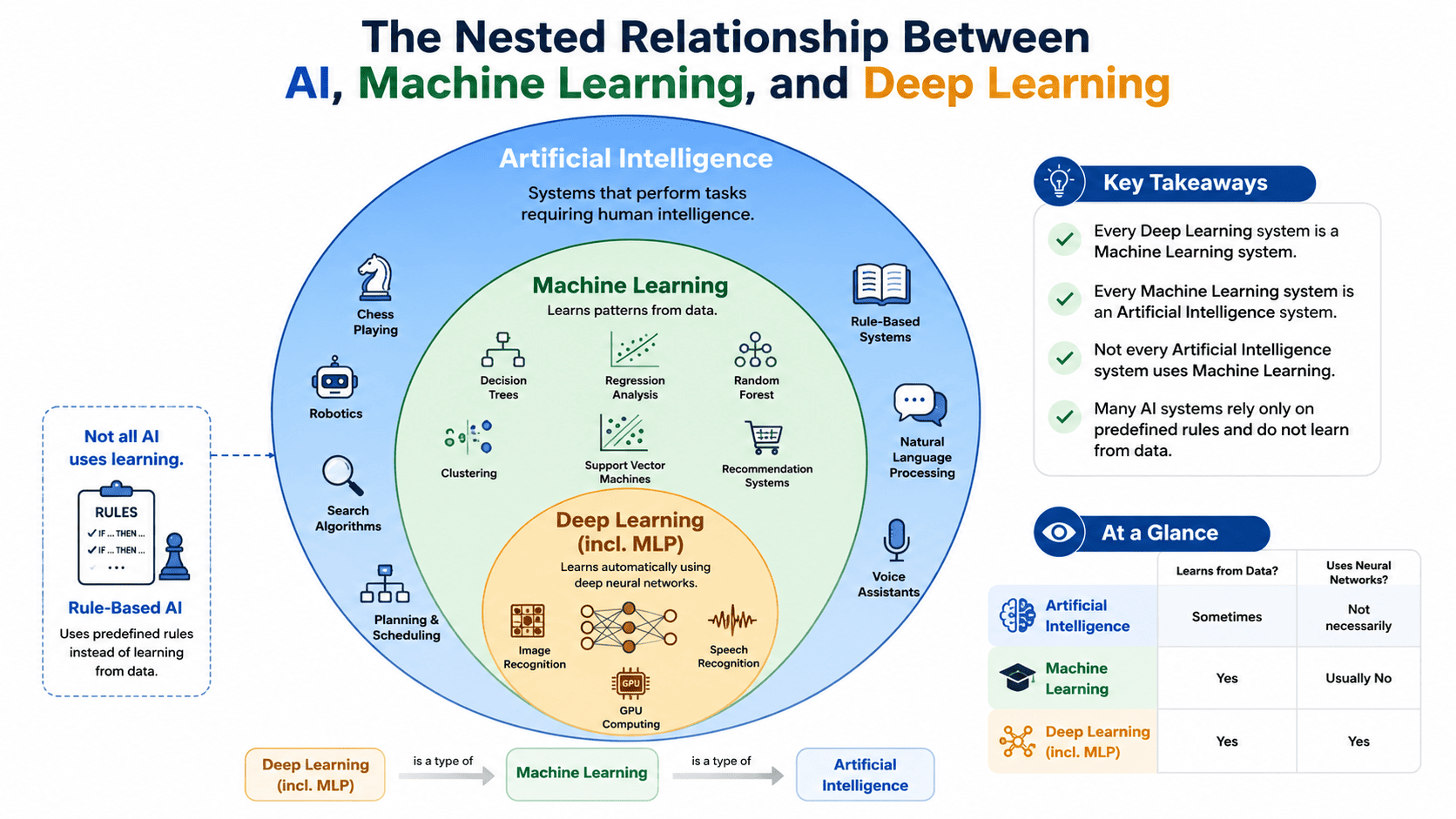
"ভেতরে ভেতরে যেভাবে কাজ করুক না কেন" অংশটি খুবই গুরুত্বপূর্ণ, কারণ AI কোনো একটি অ্যালগরিদম বা একটি টেকনিক নয়। এটি একটি বিশাল ছাতা যার নিচে গত সাত দশকের বিভিন্ন ধরনের অ্যাপ্রোচ বা পদ্ধতি রয়েছে — এর মধ্যে কিছু তৈরি হয়েছে হাতে লেখা সুনির্দিষ্ট নিয়মের উপর ভিত্তি করে, আবার কিছু তৈরি হয়েছে সম্পূর্ণভাবে ডেটা থেকে আবিষ্কৃত স্ট্যাটিস্টিক্যাল প্যাটার্নের উপর ভিত্তি করে। Multi-Layer Perceptron (MLP), যে মডেলটি নিয়ে এই পুরো কোর্সটি সাজানো হয়েছে, তা এই দ্বিতীয় ক্যাটাগরিতে পড়ে। আর এর একটি নির্দিষ্ট শাখাকে বলা হয় Deep Learning, যা নিয়ে আমরা পরবর্তী দুটি চ্যাপ্টারে বিস্তারিত আলোচনা করব।
Moravec's Paradox: সহজ কাজ কেন কঠিন হয়ে দাঁড়ায়
Moravec-এর প্যারাডক্স (Moravec's Paradox)
রোবটিসিস্ট Hans Moravec ১৯৮০-এর দশকে একটি চমকপ্রদ পর্যবেক্ষণ তুলে ধরেন: বুদ্ধিমত্তার পরীক্ষায় যে কাজগুলো সবচেয়ে কঠিন মনে হয় (যেমন দাবা খেলা, গাণিতিক সমীকরণ সমাধান করা) সেগুলো কম্পিউটারের জন্য তুলনামূলক সহজ, কিন্তু যে কাজগুলো একটি শিশুও অনায়াসে করতে পারে (যেমন হাঁটা, একটি কাপ ধরা, কারো মুখের অভিব্যক্তি বোঝা) সেগুলো কম্পিউটারের জন্য ভীষণ কঠিন।
এর কারণটা বেশ যুক্তিসঙ্গত: বিবর্তনের প্রক্রিয়ায় লক্ষ লক্ষ বছর ধরে আমাদের মস্তিষ্ক পারসেপশন (perception), মোটর কন্ট্রোল (motor control) এবং সামাজিক বোঝাপড়ার মতো দক্ষতাগুলোকে অপ্টিমাইজ করে এসেছে — এগুলো এতটাই স্বয়ংক্রিয় যে আমরা এদের "সহজ" বলে মনে করি, অথচ ভেতরে ভেতরে এগুলোর পেছনে রয়েছে বিশাল পরিমাণ কম্পিউটেশন। বিপরীতে, যুক্তিভিত্তিক ও গাণিতিক চিন্তা মানুষের বিবর্তনের ইতিহাসে অনেক সাম্প্রতিক একটি সংযোজন, তাই এটি আমাদের কাছে "কঠিন" মনে হলেও এটি প্রকৃতপক্ষে গাণিতিকভাবে অনেক বেশি সরল ও নিয়মভিত্তিক — আর ঠিক এই কারণেই একে কম্পিউটারে প্রোগ্রাম করা তুলনামূলক সহজ। এই প্যারাডক্সটি বোঝা গুরুত্বপূর্ণ, কারণ এটি ব্যাখ্যা করে কেন Neural Network এবং Deep Learning-এর মতো ডেটা-চালিত পদ্ধতিগুলো ঠিক পারসেপশন এবং প্যাটার্ন রিকগনিশনের মতো "সহজ কিন্তু কঠিন" কাজগুলোতেই সবচেয়ে বড় অগ্রগতি এনেছে।
AI-এর অস্তিত্ব আসলে কেন?
মানুষের মস্তিষ্ক এক অদ্ভুত যন্ত্র। এটি এমন কিছু কাজে আশ্চর্যজনকভাবে দক্ষ যা আমাদের কাছে একদমই কষ্টসাধ্য মনে হয় চিহ্নিত করতে — যেমন ভিড়ের মধ্যে বন্ধুর মুখ চেনা, কোলাহলের মাঝেও কারো কথা শোনা, বা দৌড়াতে দৌড়াতে একটি বল লুফে নেওয়া — অথচ এই কাজগুলোই কম্পিউটারকে দশকের পর দশক ধরে নাকানিচুবানি খাইয়েছে। অন্যদিকে, কম্পিউটার এমন কিছু কাজে অত্যন্ত দক্ষ যা মানুষের মস্তিষ্কের কাছে খুব ধীর ও বিরক্তিকর মনে হয়: যেমন দশ অঙ্কের দুটি সংখ্যার গুণ করা, অথবা মিলি-সেকেন্ডের মধ্যে লক্ষ লক্ষ ডেটাবেস রেকর্ড স্ক্যান করা।
এই দুই দিকের গ্যাপটা কমানোর জন্যই AI এর সৃষ্টি — অর্থাৎ আমাদের মতো ফ্লেক্সিবল ও প্যাটার্ন চেনার বুদ্ধিমত্তা মেশিনকে দেওয়া, আর একইসাথে মেশিনের সেই অক্লান্ত নির্ভুলতা বজায় রাখা। যদি এই কাজটা ঠিকমতো করা যায়, তবে আপনি এমন সব কাজ স্বয়ংক্রিয় করতে পারবেন যার জন্য আগে একজন প্রশিক্ষিত মানুষের প্রয়োজন হতো। ফলে মানুষ এমন সব কাজের জন্য ফ্রি হতে পারবে যেখানে সৃজনশীলতা, বিচারবুদ্ধি এবং নৈতিক যুক্তির প্রয়োজন রয়েছে।
তবে এই গ্যাপ কমানোর প্রক্রিয়াটি একমুখী নয়। AI যত ভালো পারসেপশন এবং প্যাটার্ন রিকগনিশনের কাজ করতে শিখছে, ততই এমন প্রশ্ন উঠছে যেগুলোর উত্তর শুধু টেকনিক্যাল নয়। কে দায়ী থাকবে যদি একটি স্বয়ংক্রিয় সিস্টেম ভুল সিদ্ধান্ত নেয়? একটি মডেল যদি ঐতিহাসিক ডেটা থেকে শেখে, আর সেই ডেটায় যদি পক্ষপাত (bias) লুকিয়ে থাকে, তবে মডেলটিও কি সেই পক্ষপাত শিখে ফেলবে না? এই প্রশ্নগুলো এই কোর্সের মূল বিষয়বস্তু নয়, তবে যেকোনো দায়িত্বশীল AI প্র্যাক্টিশনারের জন্য এগুলো মাথায় রাখা জরুরি। একটি টেকনিক্যালি নিখুঁত মডেলও যদি পক্ষপাতদুষ্ট ডেটা থেকে শেখে, তবে তার সিদ্ধান্তও পক্ষপাতদুষ্ট হবে।
এটি এত গুরুত্বপূর্ণ কেন?
স্কেলিংয়ের যুক্তি (The scaling argument)
একজন মানুষের কোনো একটি স্কিল শিখতে সময় লাগে, এবং প্রতিটি নতুন কেসে সেই স্কিল প্রয়োগ করতে পিক আলাদাভাবে সময় দিতে হয়। কিন্তু একটি মেশিন যখন কোনো প্যাটার্ন শিখে যায়, তখন তাকে দশ লক্ষতম নতুন কেসে প্রয়োগ করতেও প্রায় কোনো অতিরিক্ত খরচ বা সময় লাগে না। এটিই হলো AI এর এত গুরুত্বপূর্ণ হওয়ার সবচেয়ে বড় কারণ: এটি শুধু বুদ্ধিমত্তার প্রতিলিপি তৈরি করে না, এটি বুদ্ধিমত্তাকে স্কেল (Scale) করতে পারে।
একটি মডেল, যা মেডিকেল স্ক্যান পড়তে পারে, হাসপাতালের পুরো সিস্টেম জুড়ে ওয়ার্নিং সাইন ফ্ল্যাগ করতে পারে দিন-রাত কাজ করা যেকোনো রেডিওলজিস্ট টিমের চেয়েও দ্রুতগতিতে। একটি ট্রান্সলেশন মডেল একইসাথে লক্ষ লক্ষ মানুষের ভাষাগত বাধা দূর করতে পারে। একটি প্রেডিক্টিভ মেইনটেন্যান্স মডেল কারখানার প্রতিটি মেশিনকে একসাথে খেয়াল রাখতে পারে, যা কোনো মানব ইনস্পেক্টরের পক্ষে সম্ভব নয়। এটাই হলো AI এর সবচেয়ে বড় শক্তি: শুধু বেশি বুদ্ধিমত্তা নয়, বরং এমন এক বিশাল স্কেলে বুদ্ধিমত্তার প্রয়োগ যা আগে কখনোই সম্ভব ছিল না।
একটি সংক্ষিপ্ত টাইমলাইন (A Brief Timeline)
বিস্তারিত ইতিহাস — এর সমস্ত উত্থান-পতন, এআই উইন্টার এবং পুনরুত্থান নিয়ে — আমরা পরের একটি চ্যাপ্টারে আলোচনা করব। আপাতত, ফিল্ডটি আজ কেন এমন দেখাচ্ছে তা বোঝার জন্য এই সংক্ষিপ্ত রূপরেখাই যথেষ্ট।
1943
প্রথম গাণিতিক নিউরন (The First Mathematical Neuron)
McCulloch এবং Pitts দেখান যে সিম্পল বাইনারি ইউনিটগুলোকে একসাথে জুড়ে দিয়ে লজিক্যাল ফাংশন কম্পিউট করা যায় — এটিই ছিল প্রথম ইঙ্গিত যে 'চিন্তা' করা হয়তো কম্পিউটেশনের মাধ্যমে সম্ভব।
1950
টুরিং টেস্ট (The Turing Test)
Alan Turing মেশিন ইন্টেলিজেন্স মাপার একটি ব্যবহারিক মাপকাঠি প্রস্তাব করেন: কোনো মেশিনের সাথে কথোপকথন কি কোনো মানুষের কথোপকথন বলে ভুল হতে পারে?
1956
ফিল্ডটি একটি নাম পায়
Dartmouth Conference-এ 'Artificial Intelligence' শব্দটি প্রথমবারের মতো ব্যবহৃত হয়, যাকে ফিল্ডটির প্রতিষ্ঠার মুহূর্ত হিসেবে ধরা হয়।
1958
দ্য পারসেপট্রন (The Perceptron)
Frank Rosenblatt এমন প্রথম অ্যালগরিদম তৈরি করেন যা হাত দিয়ে সেট করার বদলে ডেটা থেকে নিজে নিজেই এর Weights শিখতে পারতো — এটিই এই কোর্সের সমস্ত বিষয়ের সরাসরি পূর্বপুরুষ।
1969
একটি রূঢ় প্রমাণ (A Sobering Proof)
Minsky এবং Papert একটি সিঙ্গেল-লেয়ার পারসেপট্রনের সীমাবদ্ধতা প্রমাণ করেন, যার ফলে Neural Network গবেষণায় দীর্ঘস্থায়ী এক স্থবিরতা নেমে আসে।
1986
Backpropagation জনপ্রিয় হয়
মাল্টি-লেয়ার নেটওয়ার্ক ট্রেন করার একটি দক্ষ উপায় (Backpropagation) ফিল্ডটিকে পুনরায় জীবিত করে এবং Multi-Layer Perceptron-কে ব্যবহারিক রূপ দেয়।
2012
Deep Learning-এর আধিপত্য শুরু
ImageNet প্রতিযোগিতায় AlexNet-এর বিশাল বিজয় কম্পিউটার ভিশনের জগতে আধুনিক Deep Learning-এর যুগের সূচনা করে।
2017 এর পর থেকে
Large Language Models
Transformer আর্কিটেকচার ন্যাচারাল ল্যাঙ্গুয়েজের জগতে বিশাল স্কেলে Deep Learning-এর পরিধি বিস্তৃত করে।
AI এর শ্রেণিবিভাগ (Categories of AI)
মানুষ AI-কে সাধারণত দুটি স্বাধীন অক্ষে ভাগ করে: এটি কী করতে পারে (Capability) এবং এটি কীভাবে করে (Approach)। এই দুটোই মানসিক ক্যাটাগরি হিসেবে বেশ উপকারী।
ক্ষমতার উপর ভিত্তি করে (By capability)
| ক্যাটাগরি | বিবরণ | আজ কি অস্তিত্ব আছে? |
|---|---|---|
| Narrow AI (Weak AI) | একটি মাত্র কাজ, অথবা খুব ছোট পরিসরের কিছু কাজ করার জন্য তৈরি করা হয় — যেমন স্প্যাম ফিল্টারিং, ফেস রেকগনিশন, বা দাবা খেলা। | হ্যাঁ — বর্তমানে ব্যবহৃত প্রতিটি AI সিস্টেমই Narrow AI। |
| General AI (Strong AI) | এমন একটি কাল্পনিক সিস্টেম যা একজন মানুষের মতো যেকোনো কাজ শিখতে এবং সেই বুদ্ধিমত্তা প্রয়োগ করতে পারে। | না — এটি সম্পূর্ণভাবে তাত্ত্বিক। |
| Super AI | এমন একটি কাল্পনিক সিস্টেম যার বুদ্ধিমত্তা প্রায় প্রতিটি ক্ষেত্রে মানুষের বুদ্ধিমত্তাকে ছাড়িয়ে যাবে। | না — এটি আপাতত ফিলোসফির বিষয়, ইঞ্জিনিয়ারিংয়ের নয়। |
এই কোর্সে আপনি যতগুলো অ্যাপ্লিকেশন তৈরি করবেন, যার মধ্যে MLP দিয়ে তৈরি সবকিছুই অন্তর্ভুক্ত, তার সবই Narrow AI। এটি হয়তো তার নির্দিষ্ট একটি কাজে অসাধারণ পারফর্ম করতে পারে, কিন্তু অন্য কোনো কাজ কীভাবে করতে হয় সে সম্পর্কে তার বিন্দুমাত্র ধারণা নেই।
পদ্ধতির উপর ভিত্তি করে (By approach)
| পদ্ধতি (Approach) | বিবরণ |
|---|---|
| Symbolic AI (রুল-বেসড) | একজন মানব বিশেষজ্ঞ নিজে হাতে সুনির্দিষ্ট রুল এবং লজিক্যাল স্টেটমেন্ট লিখে দেন। ডেটা থেকে স্বয়ংক্রিয়ভাবে কিছুই শেখা হয় না। |
| Machine Learning | হাতে কোড লেখার বদলে ডেটা থেকে স্বয়ংক্রিয়ভাবে আবিষ্কৃত স্ট্যাটিস্টিক্যাল প্যাটার্নের মাধ্যমে বুদ্ধিমত্তা তৈরি হয়। পরের চ্যাপ্টারে এ নিয়ে বিস্তারিত আলোচনা করা হবে। |
| Deep Learning | এটি Machine Learning-এর একটি সাবফিল্ড, যা লেয়ার্ড Neural Network (যাতে MLP-ও রয়েছে) ব্যবহার করে সরাসরি raw বা সামান্য প্রসেস করা ডেটা থেকে হায়ারার্কিক্যাল রিপ্রেজেন্টেশন (hierarchical representations) শেখে। |
নেস্টিং সম্পর্ক (The nesting relationship)
Deep Learning হলো Machine Learning-এর একটি সাবসেট, এবং Machine Learning হলো Artificial Intelligence-এর একটি সাবসেট। প্রতিটি Deep Learning সিস্টেমই একটি Machine Learning সিস্টেম, এবং প্রতিটি Machine Learning সিস্টেমই একটি AI সিস্টেম — কিন্তু এর উল্টোটা সত্যি নয়। অনেক AI (যেমন হাতে লেখা দাবার রুলবুক)-তে শেখার বা লার্নিংয়ের কোনো বিষয়ই থাকে না।
AGI নিয়ে বিতর্ক (The AGI Debate)
General AI বা AGI (Artificial General Intelligence) নিয়ে গবেষক সমাজে মতভেদ প্রবল। কেউ কেউ মনে করেন বর্তমান বড় বড় ল্যাঙ্গুয়েজ মডেলগুলোর সক্ষমতা দেখে মনে হচ্ছে AGI হয়তো দূরের কোনো স্বপ্ন নয়; আবার অনেকে যুক্তি দেখান যে এই মডেলগুলো যতই চিত্তাকর্ষক টেক্সট তৈরি করুক না কেন, তারা মূলত বিশাল পরিমাণ প্যাটার্ন মুখস্থ করা এবং পুনর্গঠন করার কাজ করছে, প্রকৃত রিজনিং বা সাধারণীকরণ নয়। এই বিতর্কের সমাধান এই কোর্সের বিষয়বস্তু নয়, কিন্তু একটি বিষয় মনে রাখা জরুরি: MLP-সহ আজকের প্রতিটি সিস্টেমই, তার প্যারামিটারের সংখ্যা যতই বিশাল হোক না কেন, সংজ্ঞা অনুযায়ী Narrow AI-ই থেকে যায়।
এটি ইতিমধ্যে কোথায় ব্যবহৃত হচ্ছে (Where This Already Shows Up)
হেলথকেয়ার (Healthcare)
এক্স-রে তে অস্বাভাবিকতা ফ্ল্যাগ করা, স্বাস্থ্য রেকর্ড থেকে রোগীর ঝুঁকি প্রেডিক্ট করা, ব্যক্তিগত চিকিৎসা পরিকল্পনার পরামর্শ দেওয়া।
ফাইন্যান্স (Finance)
ক্রেডিট স্কোরিং, জালিয়াতি বা ফ্রড ডিটেকশন, অ্যালগরিদমিক ট্রেডিং, এবং অটোমেটেড রিস্ক অ্যাসেসমেন্ট।
সাইবার সিকিউরিটি (Cybersecurity)
ইন্ট্রুশন ডিটেকশন সিস্টেম, যা শিখে নেয় 'স্বাভাবিক' নেটওয়ার্ক ট্র্যাফিক কেমন দেখতে হয়, যাতে অস্বাভাবিক কিছু দেখলে সহজেই ধরে ফেলতে পারে।
রেকমেন্ডেশন (Recommendations)
প্রায় প্রতিটি ই-কমার্স এবং স্ট্রিমিং প্ল্যাটফর্মে প্রোডাক্ট, সিনেমা এবং কনটেন্টের সাজেশান।
ম্যানুফ্যাকচারিং (Manufacturing)
প্রেডিক্টিভ মেইনটেন্যান্স, যা কোনো সরঞ্জাম নষ্ট হওয়ার আগেই তার পূর্বাভাস দেয়।
রোবোটিক্স (Robotics)
পারসেপশন এবং কন্ট্রোল সিস্টেম, যা রোবটগুলোকে ভৌত জগতে নেভিগেট এবং কাজ করার ক্ষমতা দেয়।
ন্যাচারাল ল্যাঙ্গুয়েজ প্রসেসিং (Natural Language Processing)
মেশিন ট্রান্সলেশন, সেন্টিমেন্ট অ্যানালাইসিস এবং কনভারসেশনাল অ্যাসিস্ট্যান্ট (যেমন চ্যাটবট)।
পরবর্তী চ্যাপ্টারগুলোতে আমরা এই অ্যাপ্লিকেশনগুলোর কয়েকটিতে ফিরে আসব, এবং দেখব কীভাবে বিশেষ করে একটি MLP ব্যবহার করে এসব সমস্যা সমাধান করা হয়।
মূল বিষয়গুলো (Key Takeaways)
Key Takeaways
- AI হলো এমন মেশিন তৈরির ক্ষেত্র যা মানুষের মতো বুদ্ধিমত্তার কাজগুলো করতে পারে — এটি মূলত তার টাস্ক বা কাজ দিয়ে সংজ্ঞায়িত করা হয়, কোনো নির্দিষ্ট টেকনিক বা পদ্ধতি দিয়ে নয়।
- AI এত গুরুত্বপূর্ণ কারণ এটি বুদ্ধিমত্তাকে স্কেল করতে সাহায্য করে: একবার কোনো প্যাটার্ন শিখে গেলে, নতুন কেসে সেটি প্রয়োগ করতে প্রায় কোনো খরচই হয় না।
- AI-কে এর ক্ষমতা (Narrow, General, Super — যার মধ্যে বর্তমানে শুধু Narrow AI এর অস্তিত্ব রয়েছে) এবং এর পদ্ধতি (Symbolic, Machine Learning, Deep Learning) দিয়ে ভাগ করা যায়।
- Deep Learning ⊂ Machine Learning ⊂ Artificial Intelligence — Multi-Layer Perceptron (MLP) একদম ভেতরের, সবচেয়ে স্পেশালাইজড স্তরে বসে থাকে, তবে এটি পুরো ফিল্ডের সবচেয়ে ফাউন্ডেশনাল আর্কিটেকচারগুলোর একটি।
- কিছু গুরুত্বপূর্ণ মাইলফলক — McCulloch-Pitts neuron (1943), Perceptron (1958), এবং Backpropagation (1986) — হলো সরাসরি সেই বংশধারা, যা আপনাকে সেই MLP পর্যন্ত নিয়ে আসবে, যেটি সম্পর্কে আপনি বিস্তারিত শিখতে যাচ্ছেন।
সাধারণ ভুল ধারণা (Common Mistakes)
'AI' এবং 'জেনারেল ইন্টেলিজেন্স'-কে সমার্থক হিসেবে ধরা
পপুলার মিডিয়া সবসময় যেকোনো AI সিস্টেমকেই মানুষের মতো জেনারেল ইন্টেলিজেন্সের সাথে মিলিয়ে ফেলতে ভালোবাসে। কিন্তু বর্তমানে ব্যবহৃত প্রতিটি সিস্টেম — যার মধ্যে এই কোর্সে আপনি যা তৈরি করবেন তার সবই — হলো Narrow AI: এরা নির্দিষ্ট একটি কাজে অসাধারণ, কিন্তু অন্য সব বিষয়ে তাদের কোনো জ্ঞান নেই।
ধরে নেওয়া যে AI মানেই Neural Network
Symbolic, রুল-বেসড সিস্টেমগুলোও AI-এর অংশ, যদিও সেখানে লার্নিং বা শেখার কোনো বিষয় থাকে না। Machine Learning — এবং তার ভেতরে থাকা Deep Learning — হলো অনেক পুরোনো একটি গাছের মাত্র একটি শাখা।
AGI-কে খুব কাছের ভবিষ্যৎ মনে করা
মিডিয়া হেডলাইন প্রায়ই এমনভাবে লেখা হয় যেন AGI মাত্র কয়েক বছরের ব্যাপার। বাস্তবে এ নিয়ে বিশেষজ্ঞদের মধ্যেই ব্যাপক দ্বিমত রয়েছে, আর বর্তমানে বিদ্যমান প্রতিটি সিস্টেম, তার আকার যতই বড় হোক, এখনো Narrow AI-এর সংজ্ঞার মধ্যেই পড়ে।
মনে করা যে ‘পুরনো’ AI মানেই অপ্রাসঙ্গিক
Symbolic বা রুল-বেসড সিস্টেমগুলোকে অনেকে সেকেলে মনে করেন, কিন্তু বাস্তবে আজও অনেক প্রোডাকশন সিস্টেমে রুল-বেসড এবং Machine Learning পদ্ধতি একসাথে ব্যবহৃত হয় — যেমন একটি রুল-বেসড সেফটি চেক একটি ML মডেলের আউটপুটকে ফিল্টার করে দেয়। AI-এর ইতিহাসে পুরনো পদ্ধতিগুলো নতুনদের দ্বারা সম্পূর্ণভাবে প্রতিস্থাপিত হয়নি, বরং প্রায়ই একসাথে মিলেমিশে কাজ করে।
ইন্টারভিউ কর্নার (Interview Corner)
Quick Check
বাস্তবে এটি কোথায় দেখা যায় (Where This Shows Up in Practice)
মেডিকেল ইমেজিং টুল থেকে শুরু করে ট্রান্সলেশন অ্যাপ বা ফ্রড ডিটেকশন সিস্টেম — আপনি এপর্যন্ত যতগুলো সফল AI-এর গল্প শুনেছেন, তার প্রায় সবই হলো Machine Learning-এর ওপর ভিত্তি করে তৈরি Narrow AI, এবং এর একটা বিশাল অংশ তৈরি হয়েছে নির্দিষ্টভাবে Deep Learning-এর ওপর ভিত্তি করে। এই হায়ারার্কি বা স্তরে Multi-Layer Perceptron (MLP) কোথায় বসে আছে তা বুঝতে পারাই হলো এটি নিয়ে পুরো একটি কোর্স করার প্রথম ধাপ: এটি এমন একটি কনসেপ্ট যা প্রথম থেকে শেষ পর্যন্ত পুরোপুরি বোঝা সম্ভব, অথচ এটি হলো বর্তমান বিশ্বের সবচেয়ে গুরুত্বপূর্ণ কিছু সফটওয়্যারের আর্কিটেকচারের সরাসরি পূর্বপুরুষ।